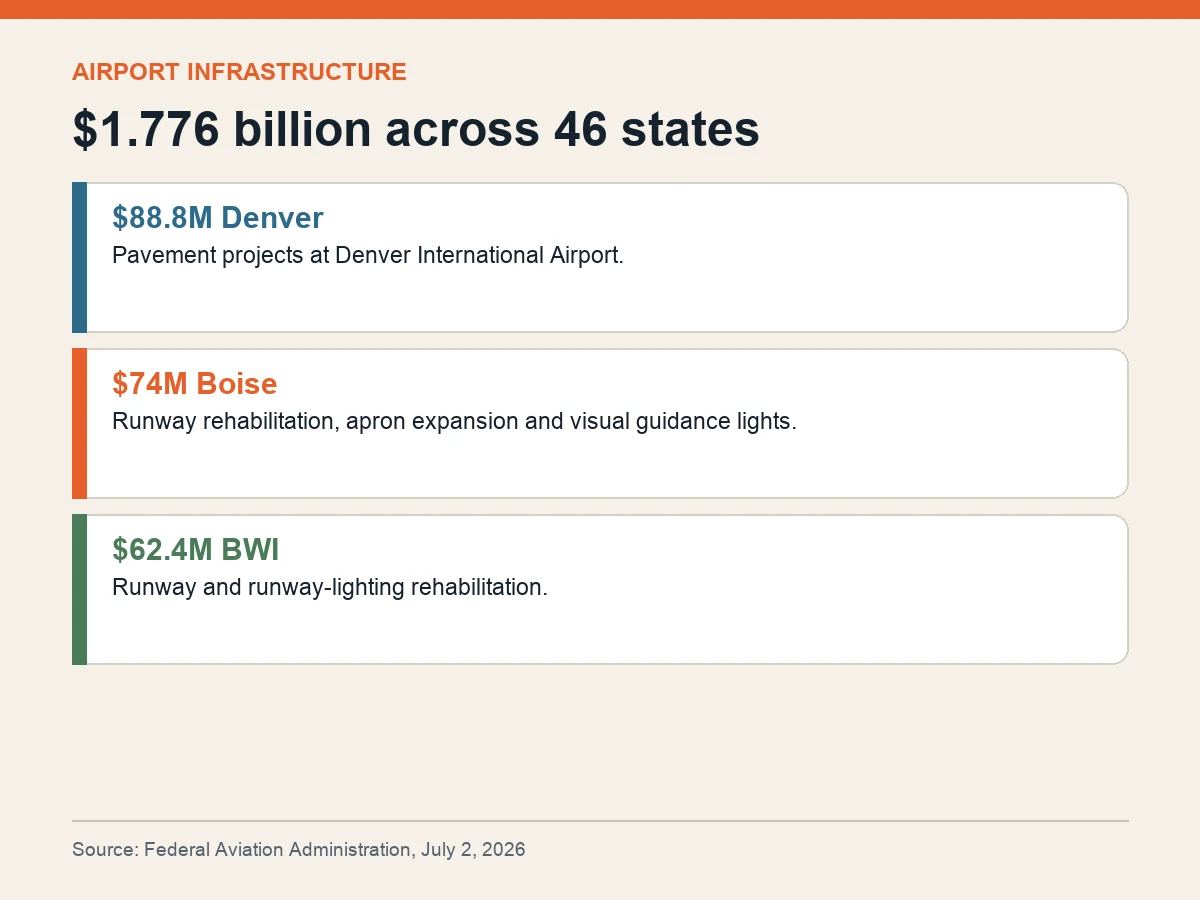
The Federal Aviation Administration announced $1.776 billion in grants for airport projects across 46 states, directing money toward runways, pavement, lighting, taxiways and emergency-response facilities.
Denver International Airport received the largest example highlighted by FAA: $88.8 million for pavement projects. Boise Airport was awarded $74 million for runway rehabilitation, apron expansion and upgraded visual guidance lights.
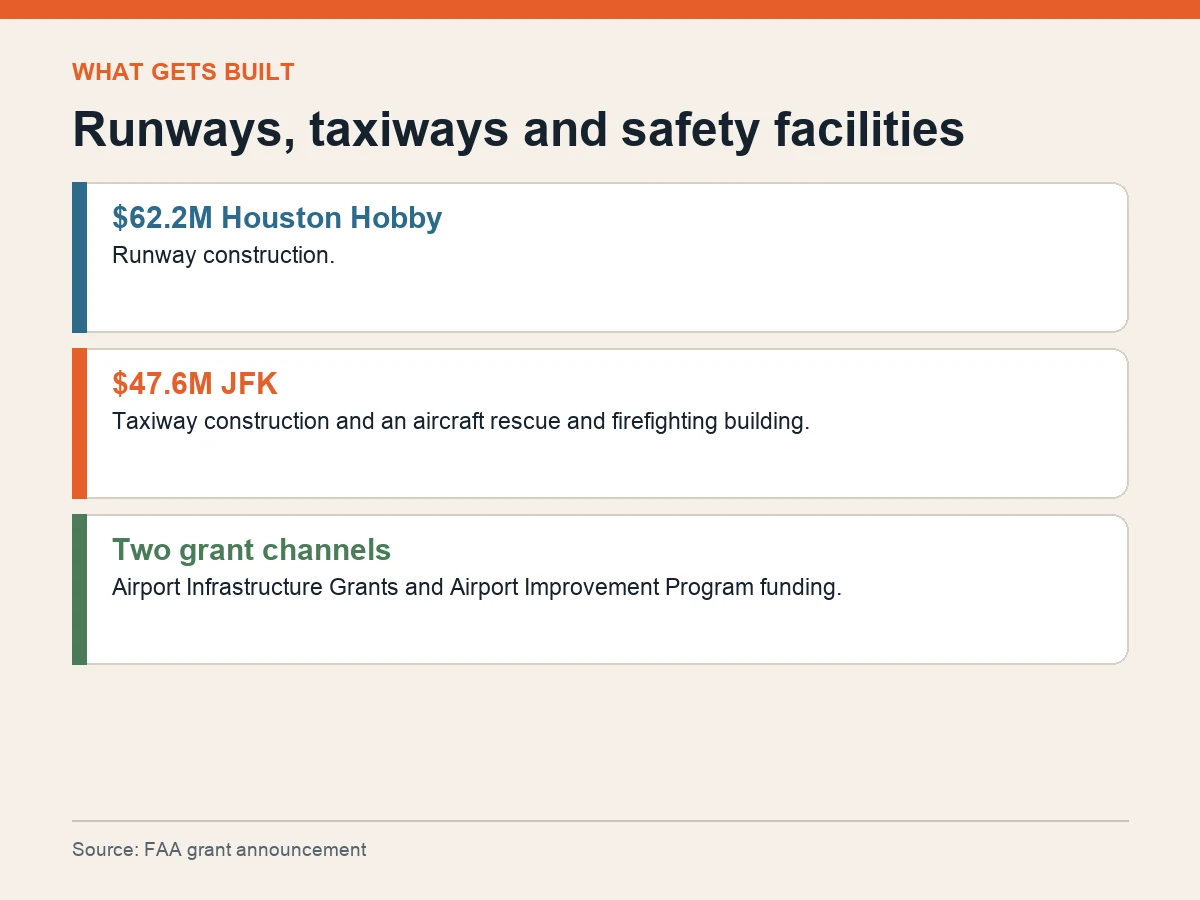
Baltimore/Washington International Thurgood Marshall Airport received $62.4 million for runway and runway-lighting rehabilitation. Houston’s Hobby Airport received $62.2 million for runway construction.
At John F. Kennedy International Airport, $47.6 million is slated for taxiway construction and reconstruction of an aircraft rescue and firefighting building. Those projects illustrate the program’s mix of capacity, surface condition, navigation and emergency-response work.
The total draws from two channels: Airport Infrastructure Grants and the Airport Improvement Program. FAA’s public announcement links to project-level data, while the $1.776 billion headline aggregates awards across many airports rather than describing one construction contract.
An award is not a finished runway. Airports must move through design, procurement and construction, and schedules or final costs can change. The stated amounts establish federal commitments and project purposes, not completion dates or performance outcomes.
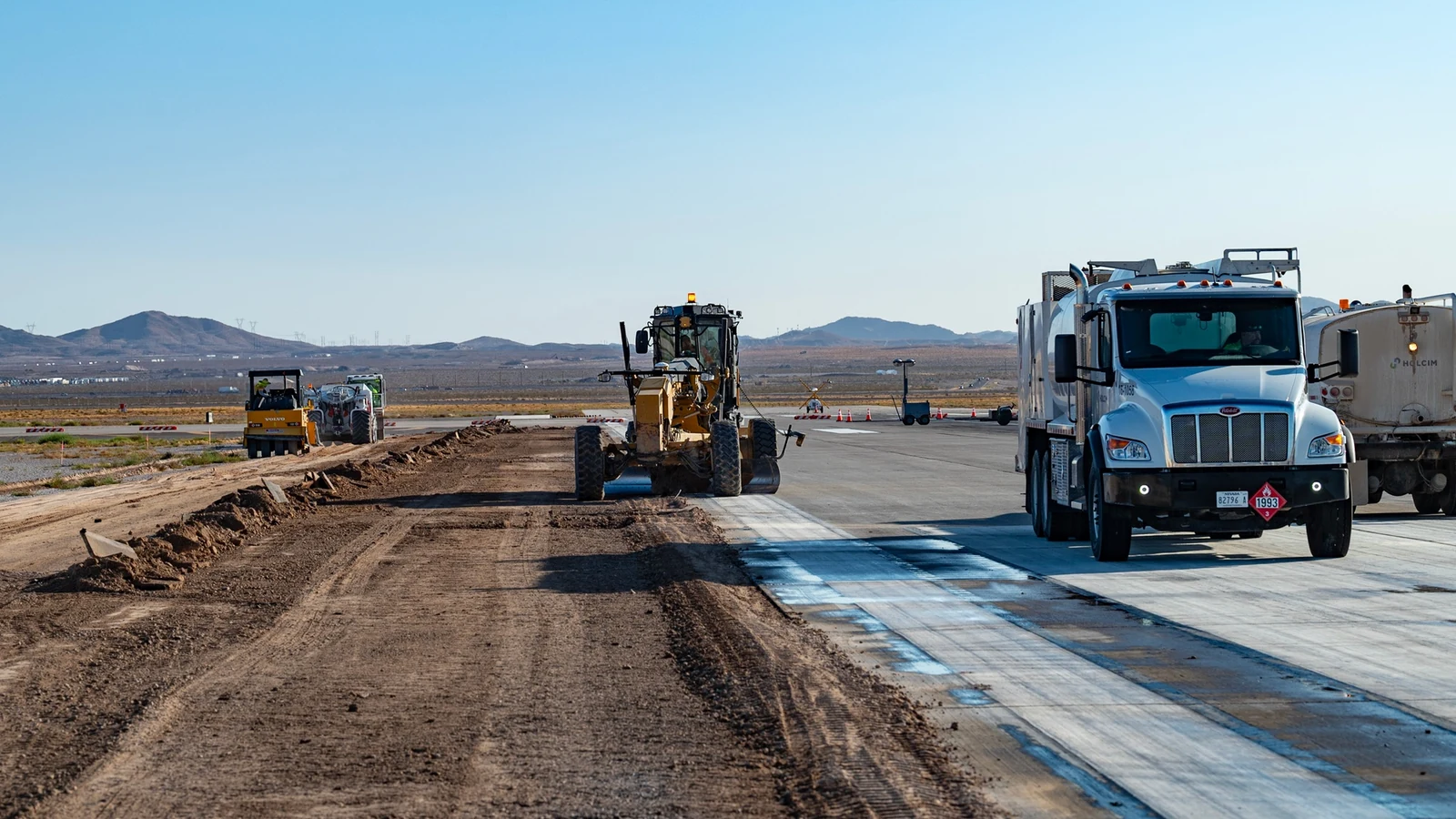
Pavement and lighting work can appear routine, but they are core safety systems. Runway surfaces must tolerate repeated aircraft loads and weather, while visual guidance systems help pilots maintain alignment and situational awareness during lower-visibility operations.
The distribution across 46 states gives the round broad geographic reach, though the announcement’s highlighted projects are not a ranking of every award by local need or expected benefit.
The useful measure now shifts from announced dollars to delivered infrastructure: whether airports complete the specified work, keep projects within scope and translate new surfaces, lighting and rescue facilities into durable operational improvements.
For travelers, most of that work will remain behind the scenes or beneath the wheels. Its public value will appear in fewer pavement restrictions, more reliable airfield lighting and facilities capable of supporting safe operations over years rather than in a one-day grant announcement.