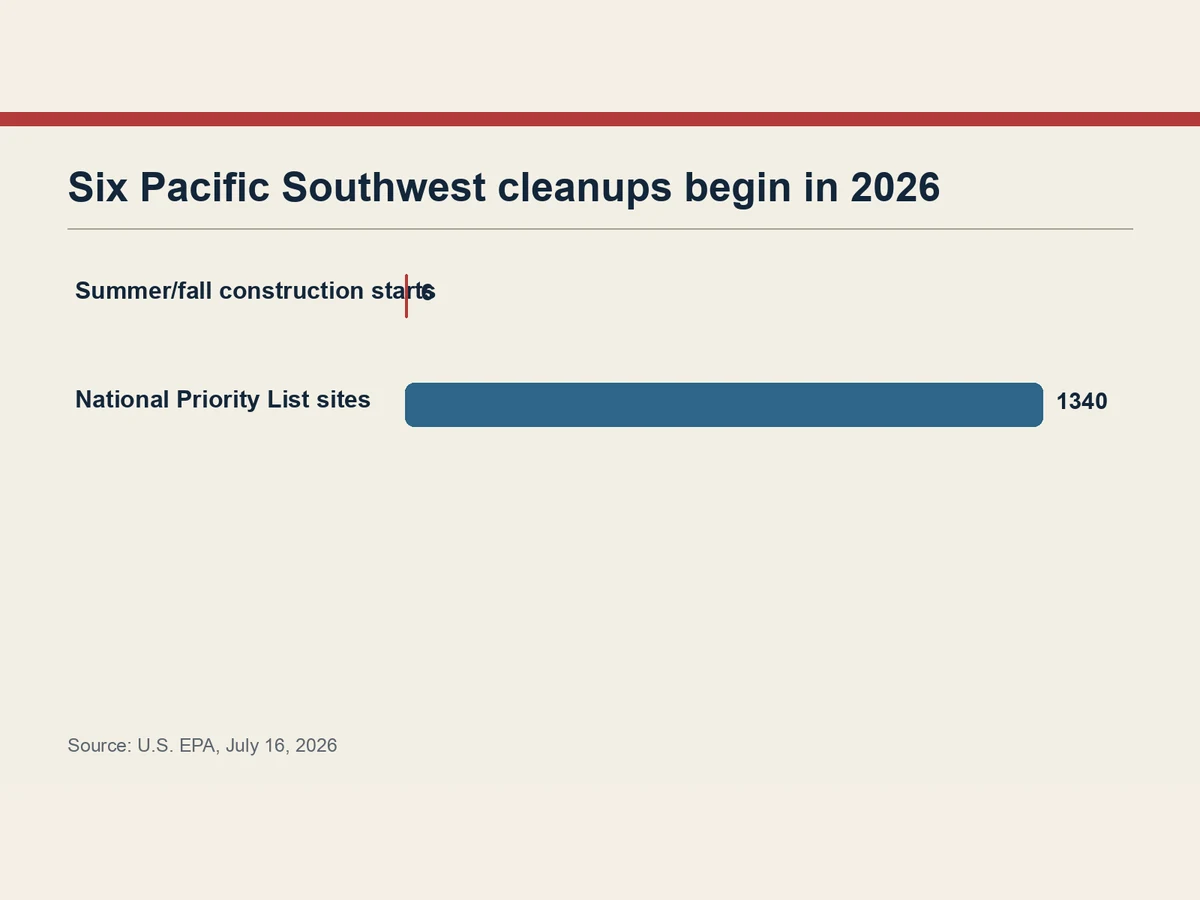
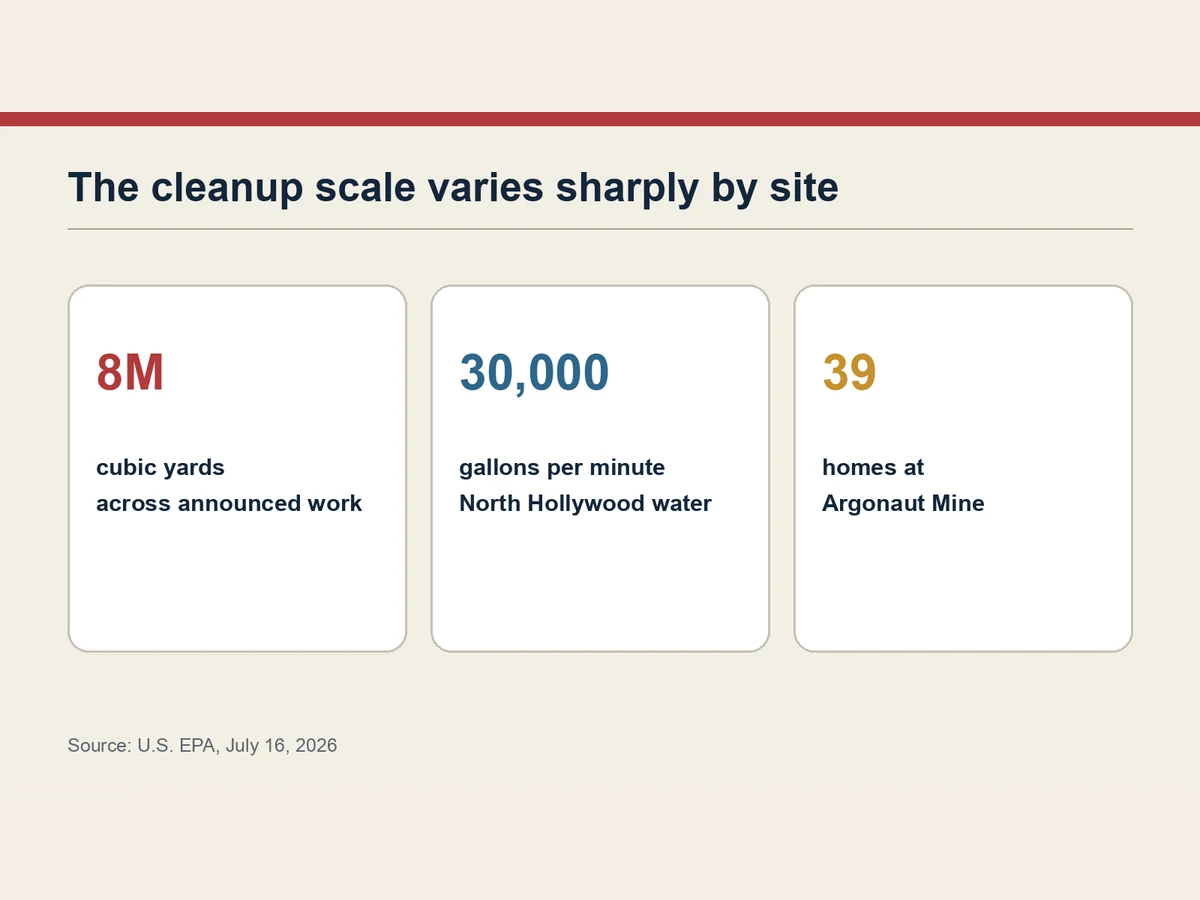
The Environmental Protection Agency is moving six Pacific Southwest Superfund cleanups into construction from July through fall 2026, a regional package that the agency says involves roughly 8 million cubic yards of uncontrolled contaminated soil.
The sites are not one uniform project. They include uranium and mercury mine waste, heavy metals in residential yards, industrial soil contamination and a polluted drinking-water aquifer. Each has its own remedy, schedule and oversight partners.
At Northeast Church Rock on Navajo Nation lands in New Mexico, EPA plans to move approximately 1 million cubic yards of uranium mine waste to a nearby engineered repository. The former mine sits about 17 miles northeast of Gallup.
At Lava Cap Mine in California, a new wetland-based treatment system will use gravity to route contaminated water, reducing energy use and waste generation. At Argonaut Mine in Jackson, crews will remove contaminated soil from 39 residential properties and replace it with clean material.
The Southern Avenue Industrial Area in South Gate is scheduled for removal of more than 3,000 cubic yards of contaminated soil. EPA says the work is intended to reduce direct exposure and prevent additional groundwater contamination.
The largest drinking-water component is in North Hollywood. Two treatment plants are designed to clean groundwater and provide up to 30,000 gallons per minute of drinking water. Capacity is not the same as actual continuous output, which will depend on operating conditions.
At Sulphur Bank Mercury Mine beside Clear Lake, an initial residential phase covers 13 properties and about 6,000 cubic yards of waste. Later phases would excavate, consolidate and cover 2.5 million tons of mine waste, including material along the shoreline.
EPA also expects work at the Iron King site in Dewey-Humboldt, Arizona, later in 2026, but it is outside the six-site construction-start list described in the regional announcement.
The clearest measure of progress will come after mobilization: contaminated material actually removed or contained, treatment systems operating within standards and residents protected from exposure. Announced starts establish the work; they do not by themselves certify completion.