The Environmental Protection Agency has released draft risk evaluations that preliminarily find unreasonable human-health risk from o-dichlorobenzene and p-dichlorobenzene under certain conditions of use.
The findings are draft scientific and regulatory assessments under the Toxic Substances Control Act. They are not final restrictions, product recalls or a risk-management rule.
EPA identifies inhalation as the main exposure route across the conditions driving its preliminary findings, with possible dermal exposure in some occupational and consumer scenarios.
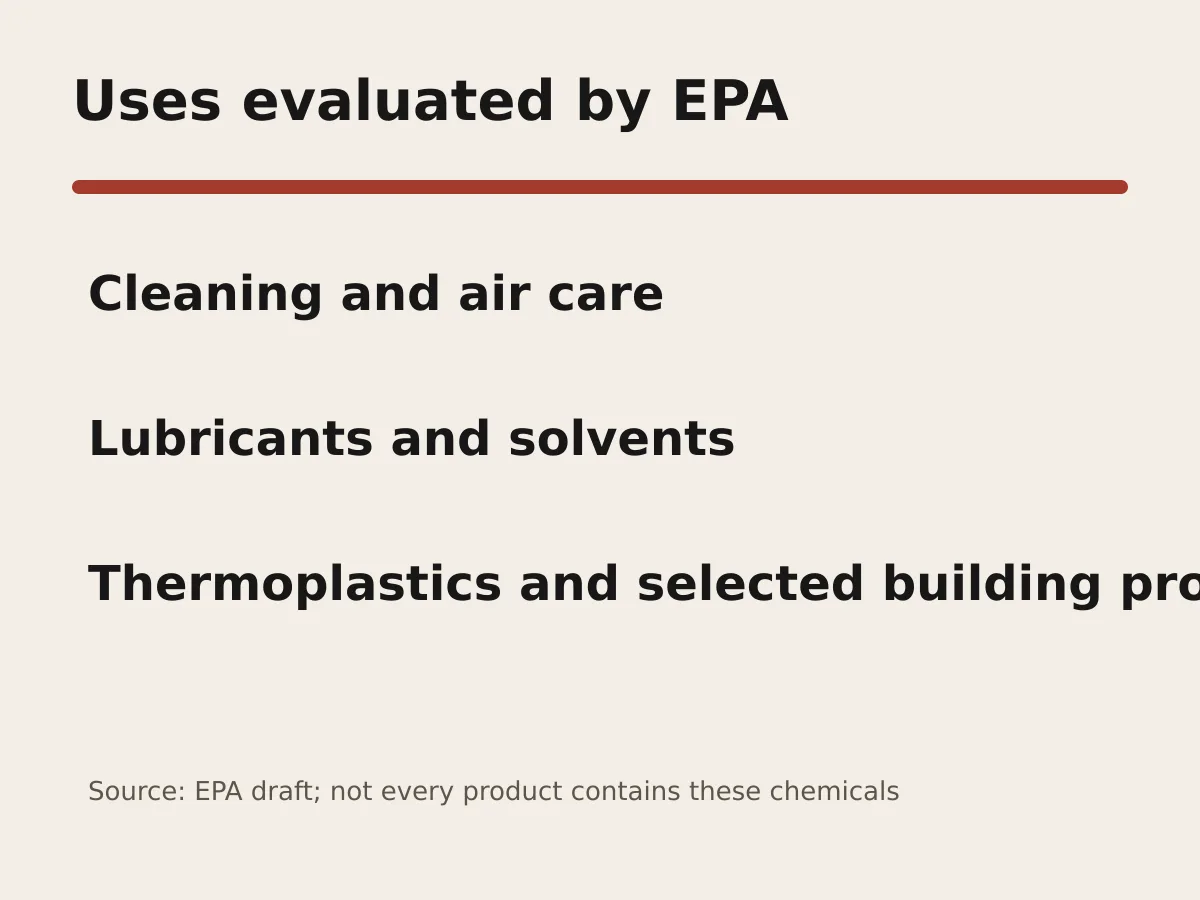
The evaluated uses include specified cleaning and degreasing applications, air-care products such as some continuous air fresheners, lubricants and greases, thermoplastics, solvents and selected building products.
That list does not mean every product in those categories contains either chemical. Product formulations and conditions of use differ, and the draft evaluations address the uses defined in EPA's record.
The two isomers have the same chemical formula but different arrangements of chlorine atoms. EPA evaluates them separately because their uses, exposure patterns and hazard information are not identical.
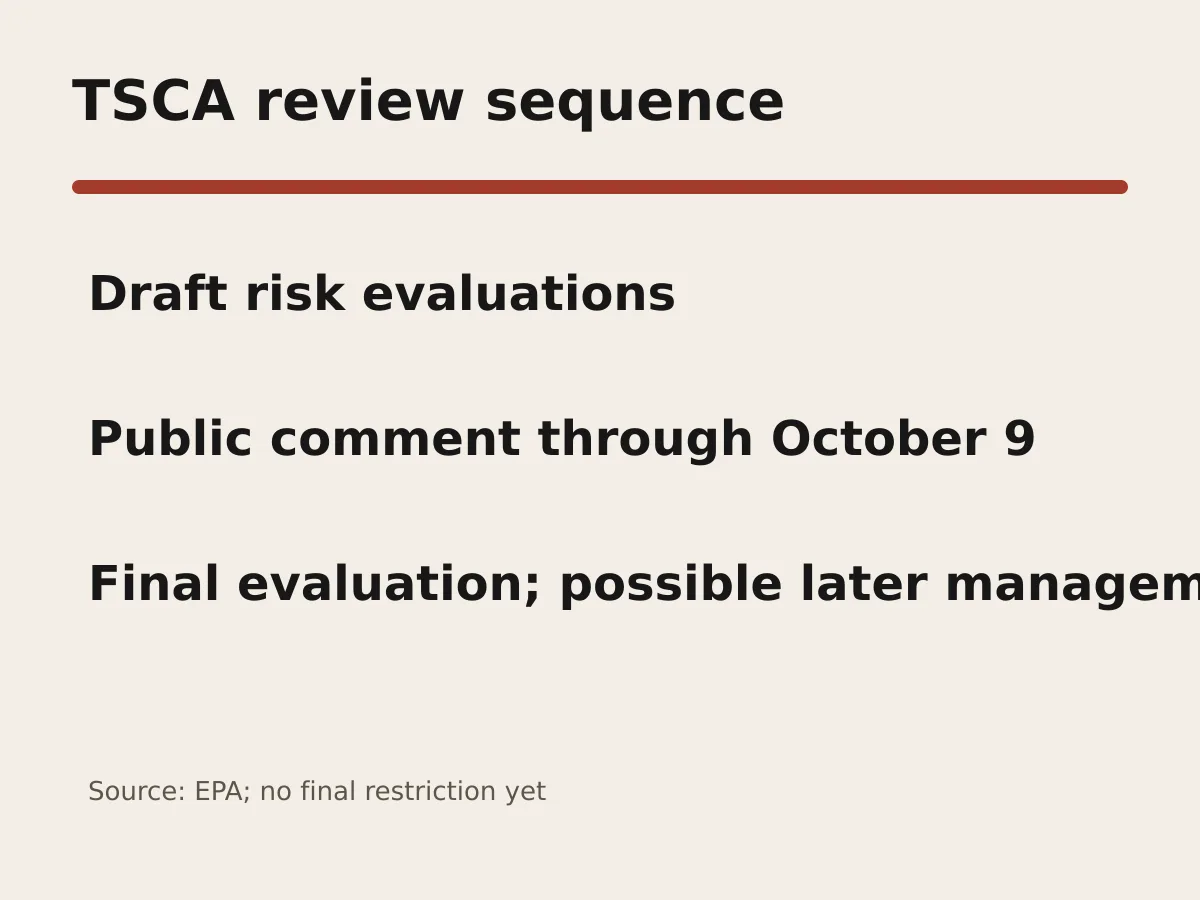
A final unreasonable-risk determination could lead to a later risk-management process. The present notice does not specify which controls EPA would adopt or when any requirement would take effect.
The draft is not individualized medical guidance. People seeking information about a particular product should consult its current label and safety information rather than infer chemical content from a broad product category.
Comments are due Oct. 9, 2026. EPA can revise its exposure estimates, risk characterizations and overall conclusions after reviewing public submissions and peer-review input.