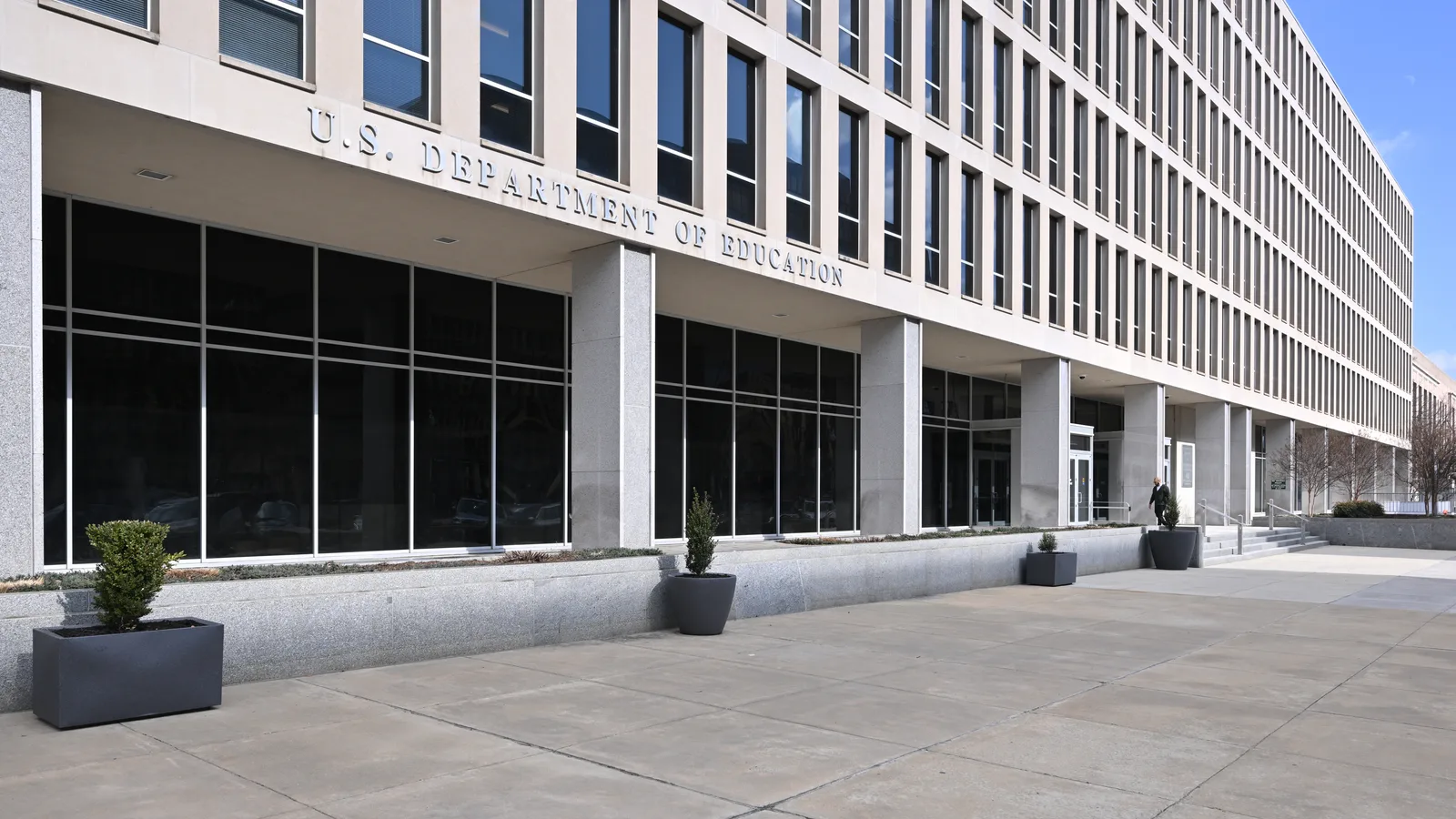
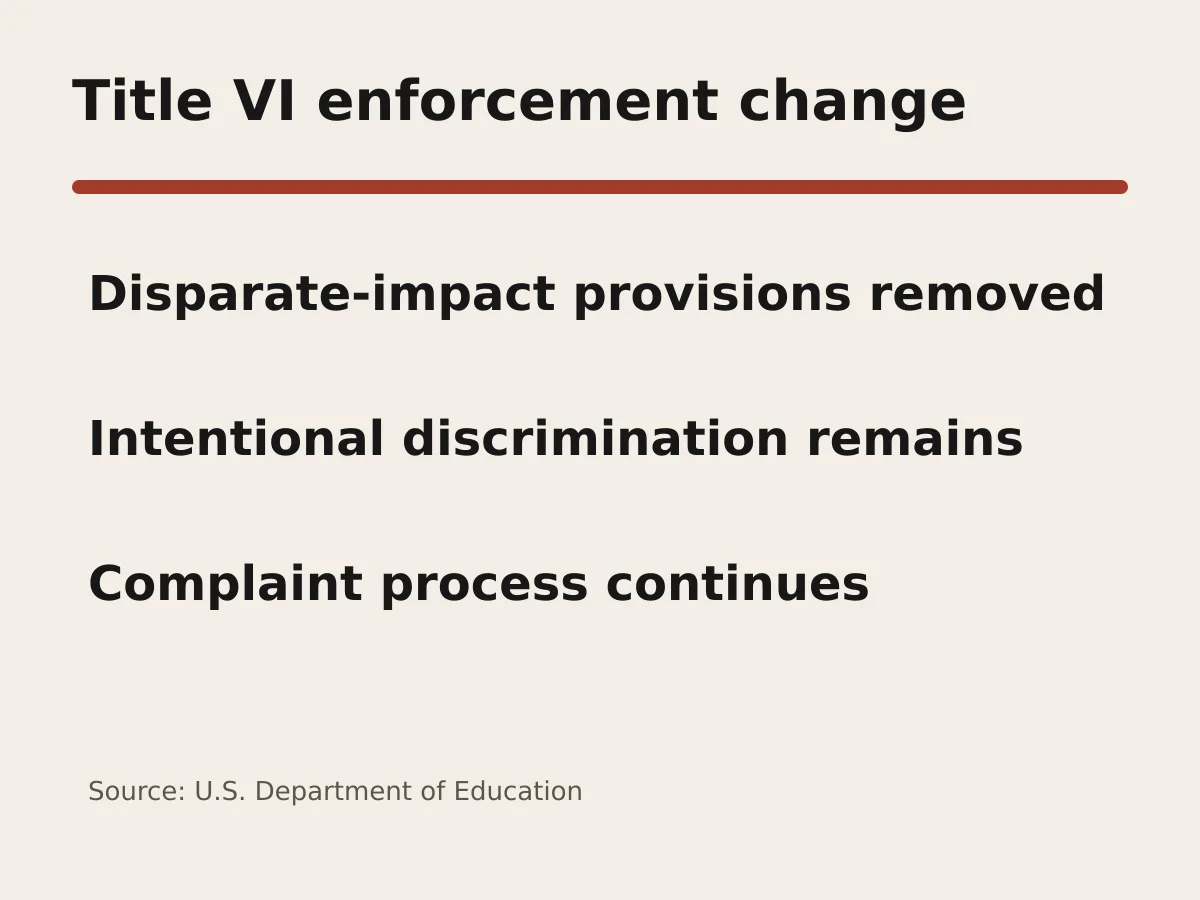
The U.S. Department of Education announced that it is removing several disparate-impact provisions from the regulations its Office for Civil Rights uses to enforce Title VI.
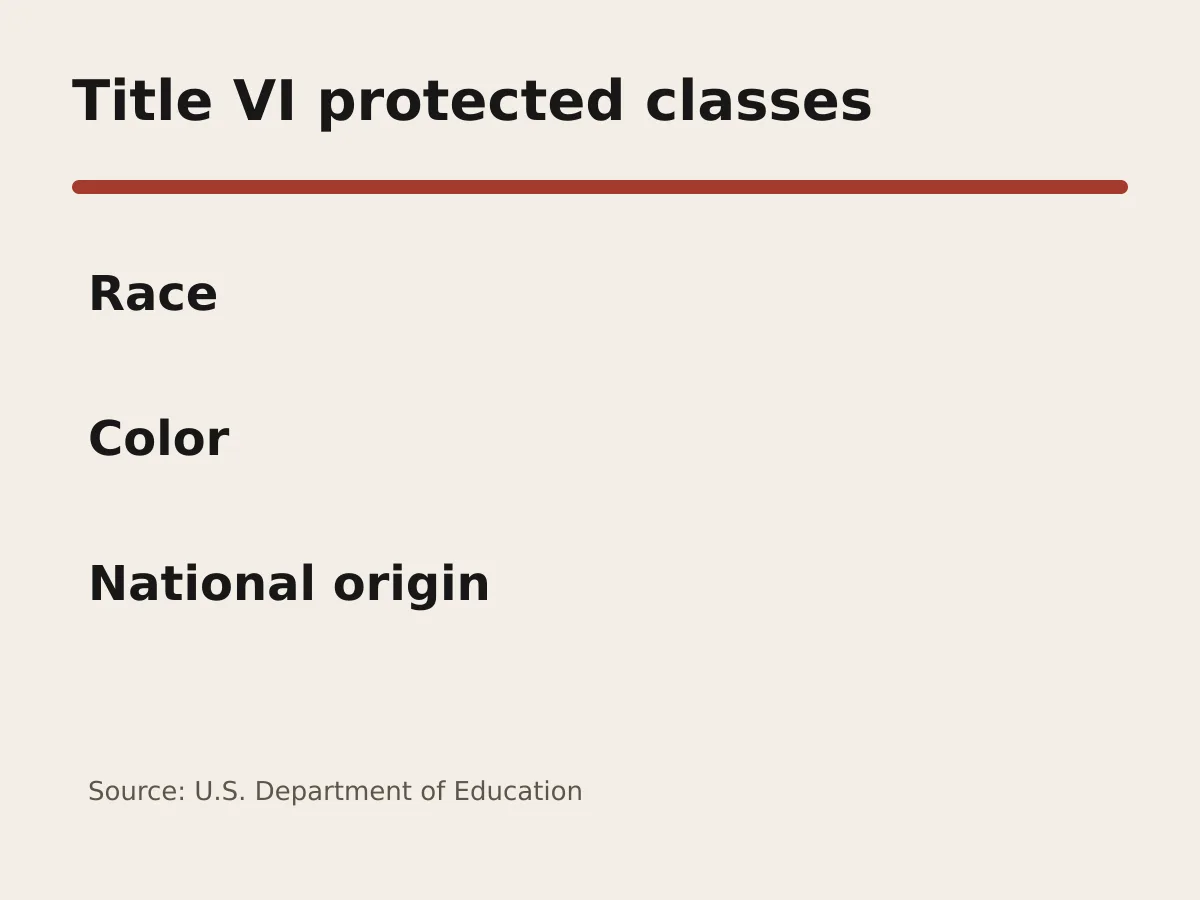
Title VI bars discrimination based on race, color and national origin in programs receiving federal financial assistance. The department says the change aligns enforcement with intentional discrimination rather than outcomes produced by facially neutral policies.
A disparate-impact framework can examine whether a neutral rule falls more heavily on a protected group without requiring proof that the rule was adopted with discriminatory intent. The department's announcement rejects that basis within the provisions it identified.
The action follows Executive Order 14281, issued in April 2025, which set an administration policy to eliminate disparate-impact liability across federal enforcement. The Justice Department had updated its own Title VI regulations in December 2025.
The Education Department's release points specifically to Title 34, Part 100, the regulations governing Title VI enforcement for recipients of its funding. It does not repeal the Title VI statute.
Schools can still face federal action for intentional discrimination, and students, parents and advocates may continue to file discrimination or retaliation complaints electronically with the Office for Civil Rights.
The policy changes what evidence the department says it will use to establish a violation. It does not by itself resolve how courts will treat disparate-impact theories under other statutes or regulations.
The announcement did not identify a school-specific finding or quantify how many pending cases could be affected. Any effect on investigations will depend on the facts, legal authority and procedural status of each matter.
For education institutions, the immediate operational signal is a narrower federal administrative theory under Part 100, paired with continuing obligations not to discriminate intentionally and to respond to the existing complaint process.