The U.S. Department of Education has finalized an earnings accountability system that can cut a college program off from federal Direct Loans when its graduates do not outearn workers with a lower level of education.
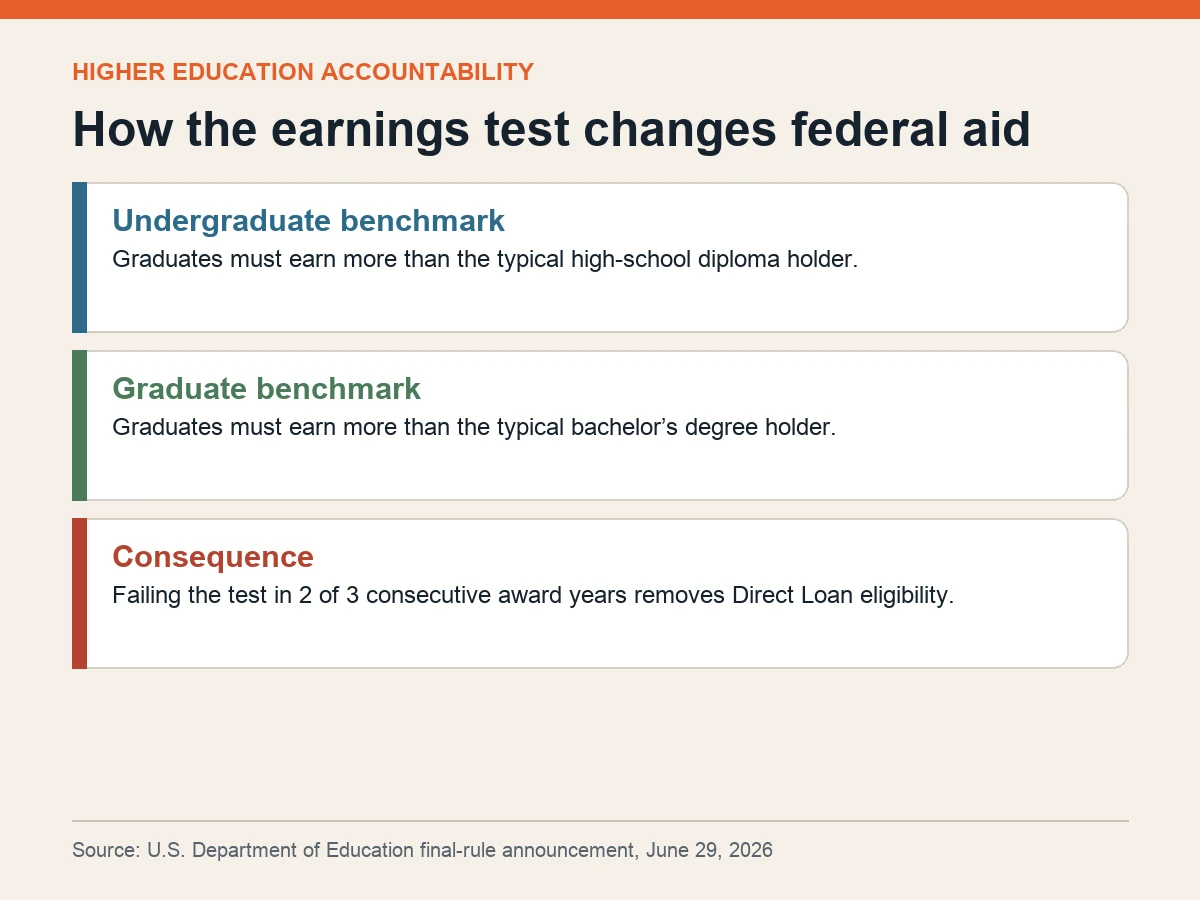
Under the Student Tuition and Transparency System, or STATS, undergraduate programs must show that their graduates earn more than the typical worker with only a high-school diploma. Graduate programs must beat the earnings of the typical bachelor’s degree holder. The comparison is a threshold test, not a guarantee that every graduate will earn more.
The first consequence is tied to repetition. A program that misses its benchmark in two of three consecutive award years loses eligibility for the Direct Loan program. That can remove a major source of financing for students even while the program remains open.
Sustained failure can carry a wider penalty. After three years of consistently missing the earnings measure, the Department could terminate Title IV eligibility — including Pell Grants — for all of an institution’s programs classified as low-earning outcomes.
The rule also aligns the new statutory earnings standard with the existing Financial Value Transparency and Gainful Employment framework. The Department says nearly all programs and sectors will operate under the same transparency and earnings-accountability structure regardless of an institution’s tax status or credential level.
That does not mean every program faces consequences on the same date. The Department delayed eligibility effects for programs preparing students for occupations in which most workers receive tipped income. It said the delay will allow reported earnings to reflect tax years covered by the federal “No Tax on Tips” policy and will last at least one year.
The final rule includes narrow institutional and program exceptions. Institutions that do not participate in Direct Loans and have not participated during the five most recently completed award years are exempt from automatic Title IV loss. Institutions exclusively serving people with documented disabilities are also exempt from the eligibility consequences.
A program that has not yet been classified as a low-earning outcome can avoid automatic Title IV loss through an agreement with the Department that bars Direct Loan borrowing for that program for at least five years. That option still removes federal loan access; it changes the path by which the sanction occurs.
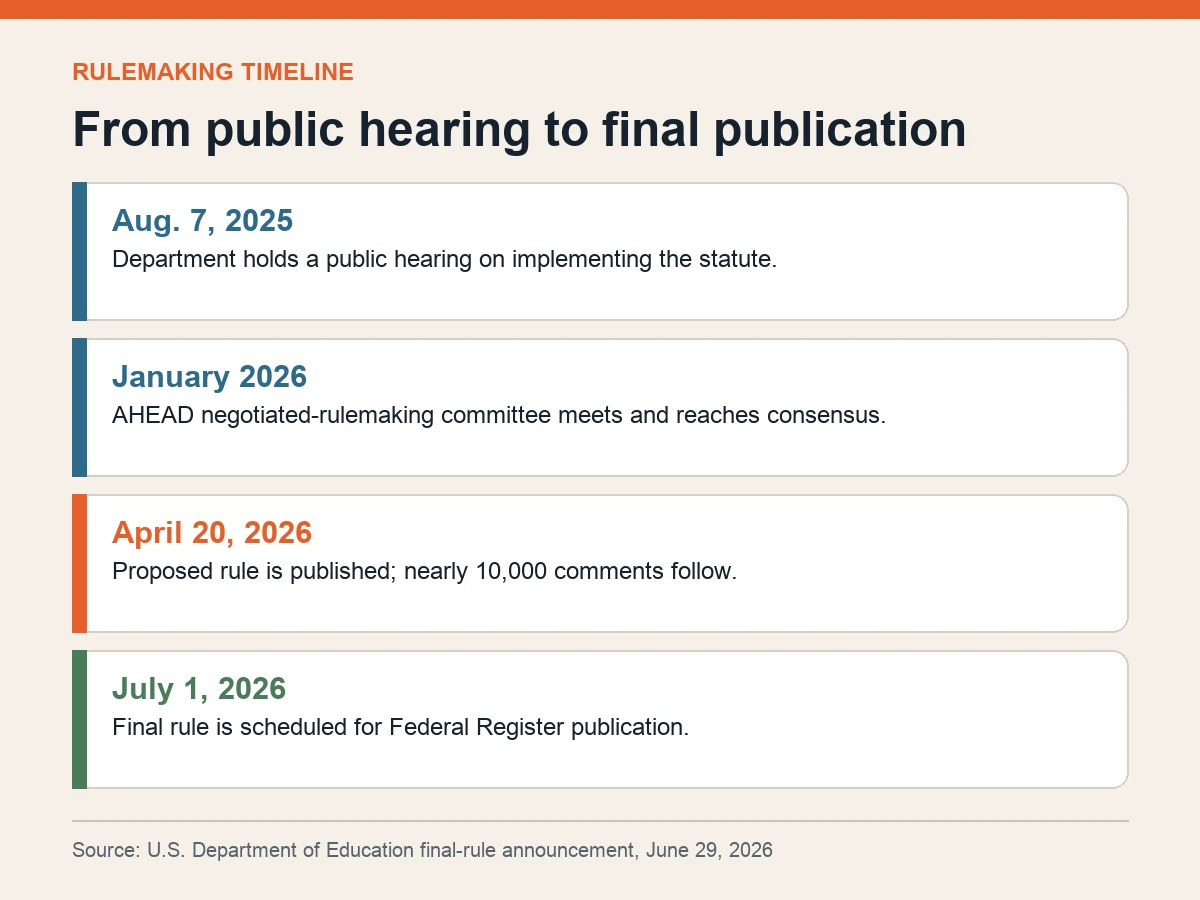
The rule followed a public hearing in August 2025, five days of negotiated rulemaking in January 2026 and an April 20 proposed rule. The Department said it received nearly 10,000 comments, which it summarized and addressed in the final rule scheduled for Federal Register publication on July 1.
For students, the useful measure will be program-level disclosure: which benchmark applies, which award years count and whether a program has failed once or is approaching a federal-aid consequence. The Department’s announcement establishes the framework but does not publish a list of individual programs that pass or fail.