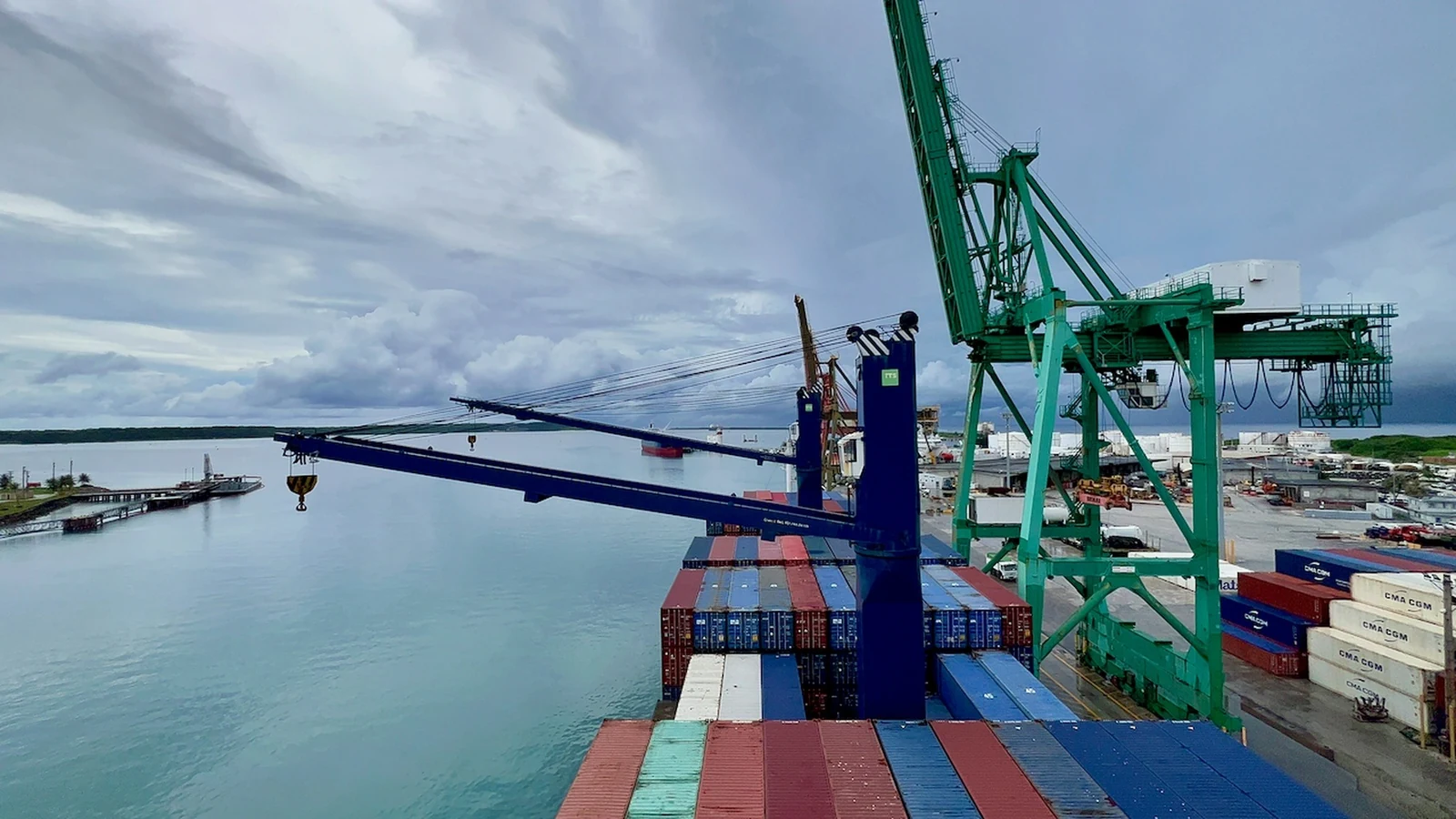
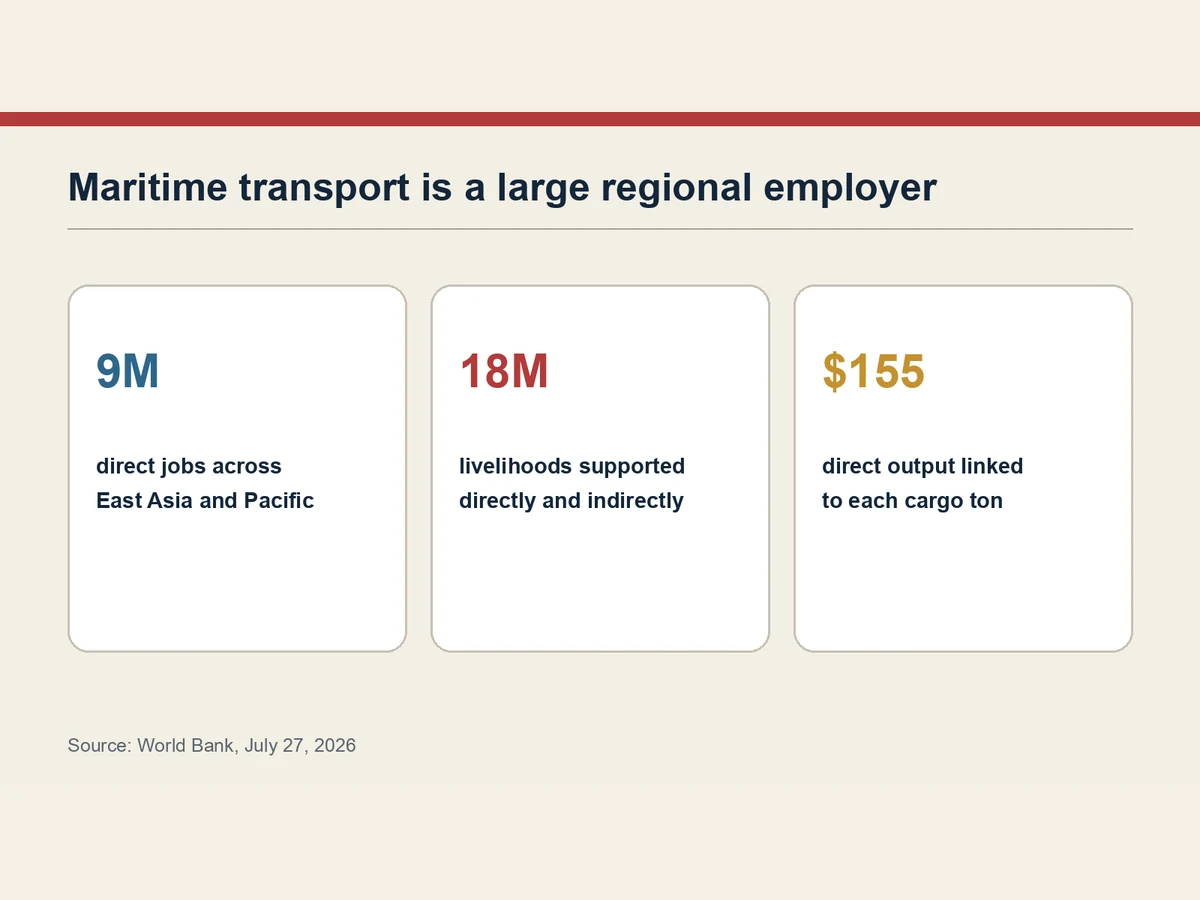
Maritime transport directly employs as many as 9 million people across East Asia and the Pacific and supports up to 18 million livelihoods when indirect activity is included, according to a new World Bank regional assessment.
The bank estimates that moving one ton of cargo generates about $155 in direct economic output. When supply-chain and wider effects are included, the estimated value rises to between $310 and $620 per ton.
Those figures frame ports and shipping as more than physical links for traded goods. Terminal work, logistics, ship services, maintenance, fisheries connections and businesses that depend on reliable delivery all contribute to the regional employment footprint.
The estimates are regional, not a ledger for every country. East Asia’s large manufacturing economies and small Pacific island states have different cargo volumes, labor markets and exposure to shipping costs, so national results can vary widely.
The World Bank argues that policy should connect efficiency with safety, environmental performance and energy security. Faster cargo handling has limited value if workers face weak protections, systems fail during shocks or fuel dependence creates new vulnerabilities.
Digital port systems and better coordination can reduce delays and make supply chains more predictable. Cleaner equipment and vessels can cut local pollution, but investment choices must fit port scale, electricity systems and available finance.
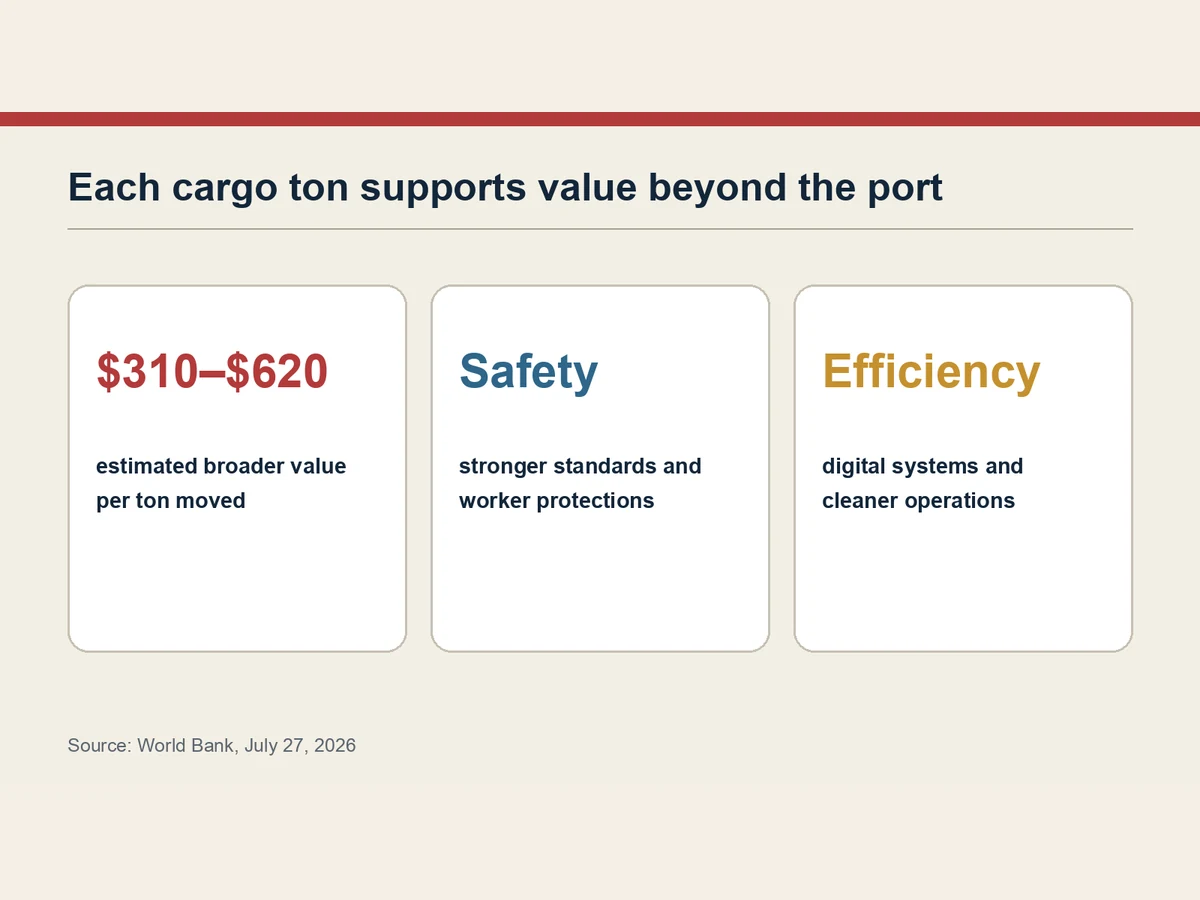
The per-ton value range also needs interpretation. It represents modeled economic activity associated with cargo movement, not cash received by a port authority and not a guaranteed return from any one infrastructure project.
For island economies, reliability may be as important as throughput. A missed sailing or damaged berth can interrupt food, fuel and medical supplies even when annual cargo totals look modest beside a major Asian hub.
The report supplies a common regional baseline for policy and investment. The next useful evidence will be country-level measures showing which safety, digital and energy projects improve worker outcomes, reduce delays and keep essential trade moving.