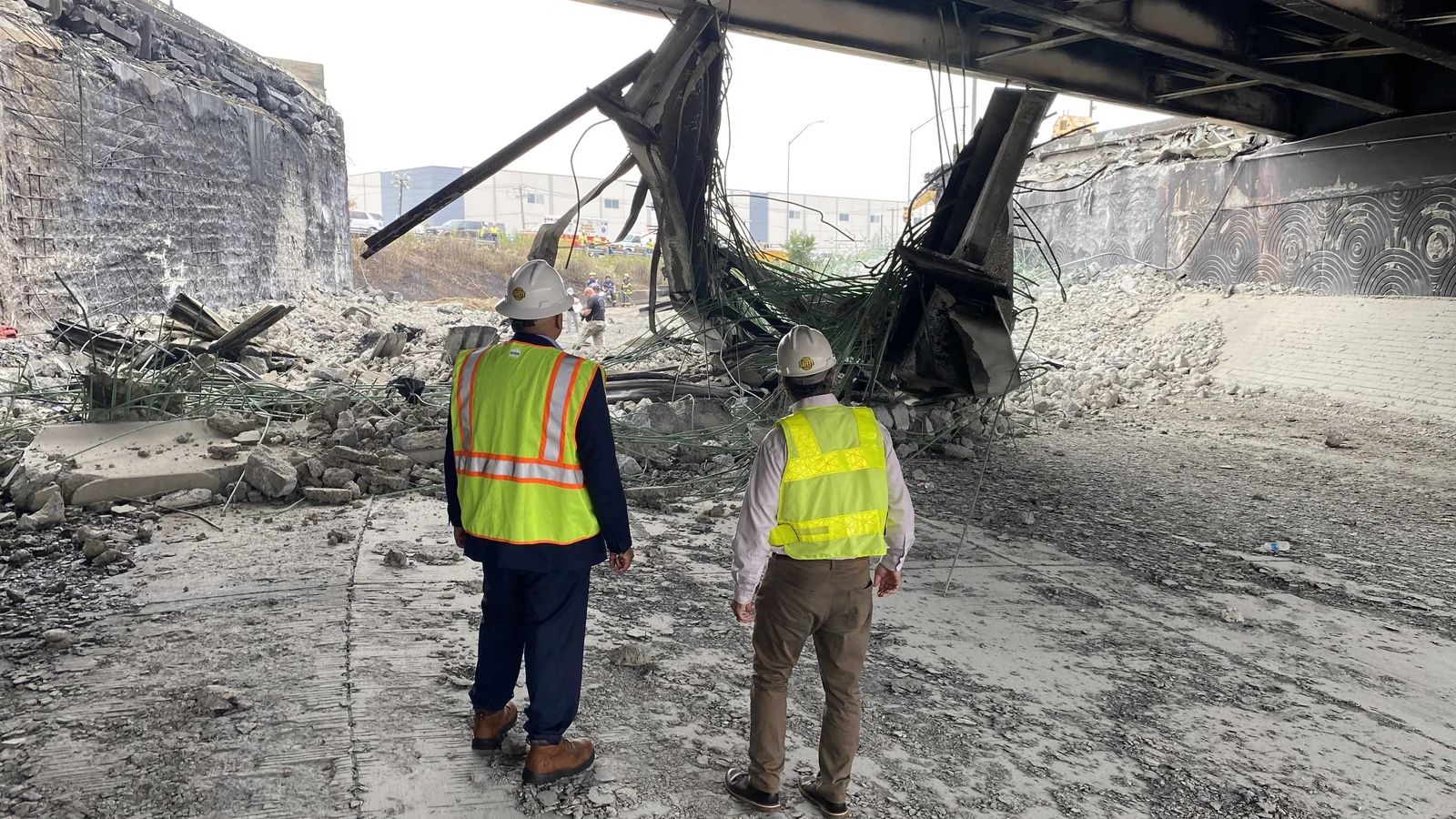
The U.S. Department of Transportation has launched an initiative to apply artificial intelligence to the design, operation and maintenance of transportation infrastructure, the agency announced.
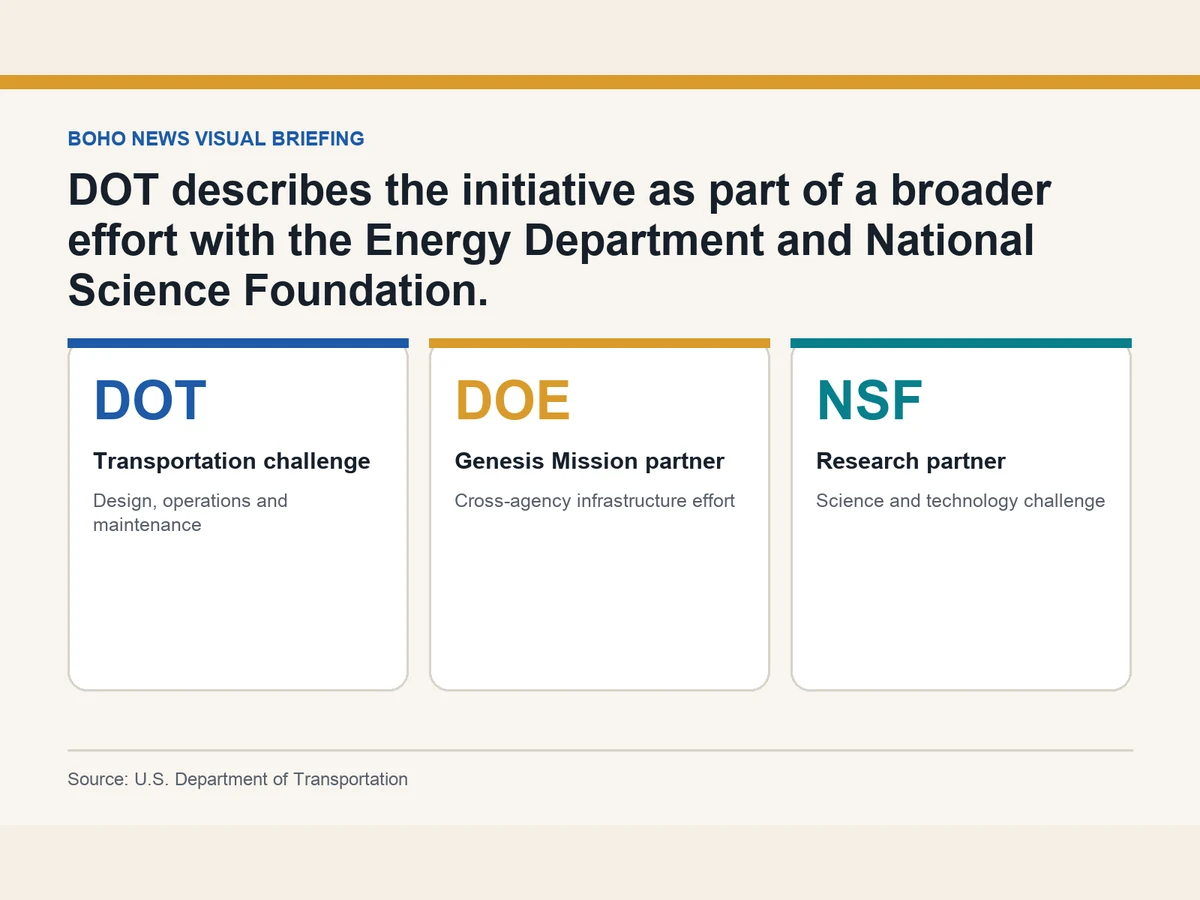
The effort is part of the federal Genesis Mission and is being coordinated with the Department of Energy and the National Science Foundation. The department described it as a challenge focused on the broader physical infrastructure system rather than a single road, rail or aviation project.
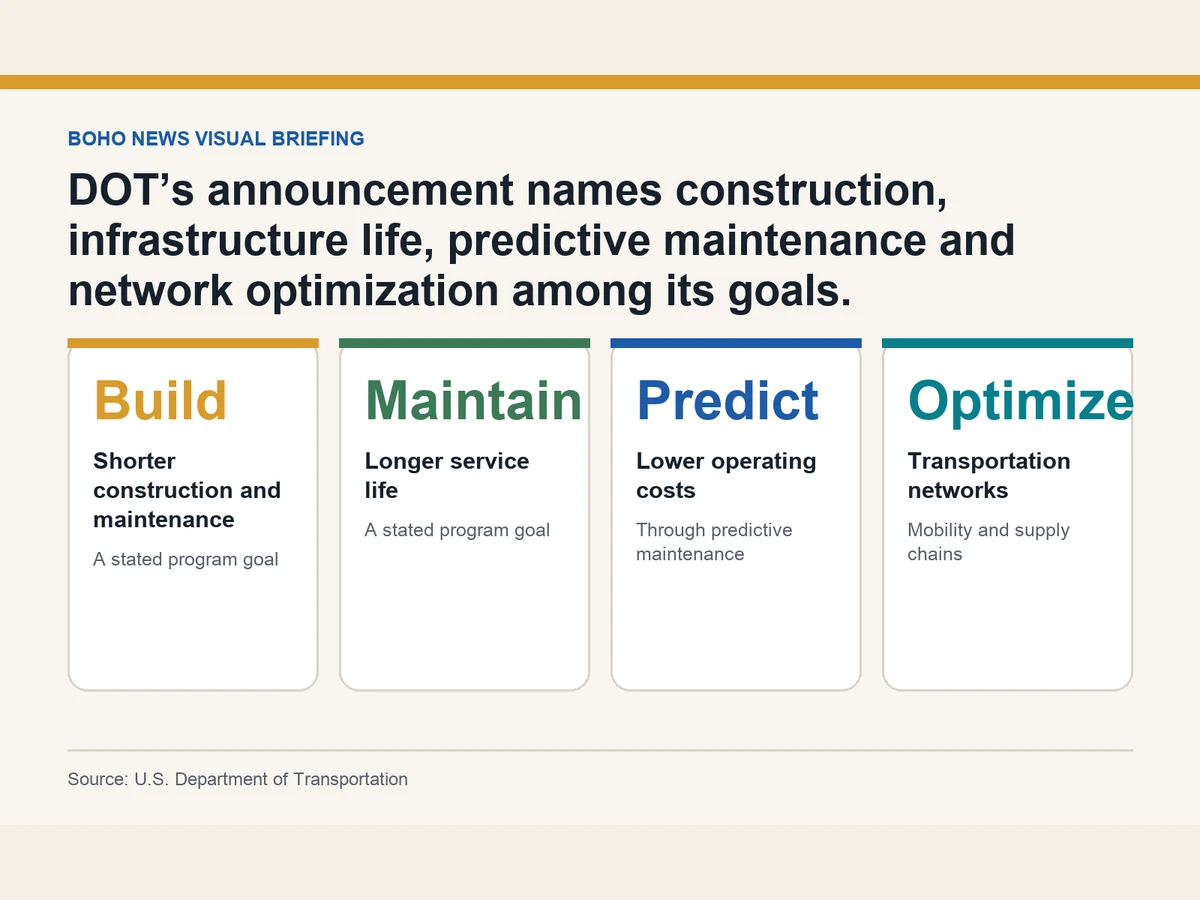
Transportation officials listed several goals, including shortening construction and maintenance time, extending the service life of infrastructure, reducing operating costs through predictive maintenance and improving the performance of transportation networks.
Other stated priorities include reducing urban congestion and supply-chain friction and examining how transportation efficiency may affect housing availability and affordability.
The announcement describes a research and modernization agenda. It does not identify specific contracts, grant recipients, project-level budgets or deadlines for deploying an AI system in a particular city or transportation mode.
That distinction matters because predictive maintenance and network optimization depend on reliable data, clearly defined performance measures and safeguards against faulty or biased automated decisions. The department's goals will need to be evaluated through later projects and results.
The initiative also raises practical questions about how agencies will combine data from roads, ports, railroads, transit systems and other infrastructure. The announcement says the government wants to treat the transportation network as an interconnected system, but it does not specify a common technical architecture.
DOT cited potential benefits for safety, cost and efficiency. Those benefits remain prospective until the department publishes project designs, evaluation methods and evidence from actual deployments.
Future notices from DOT, DOE and NSF should provide the measurable details: which problems will be tested, what data will be used, how contractors or researchers will be selected and how performance and safety will be independently assessed.