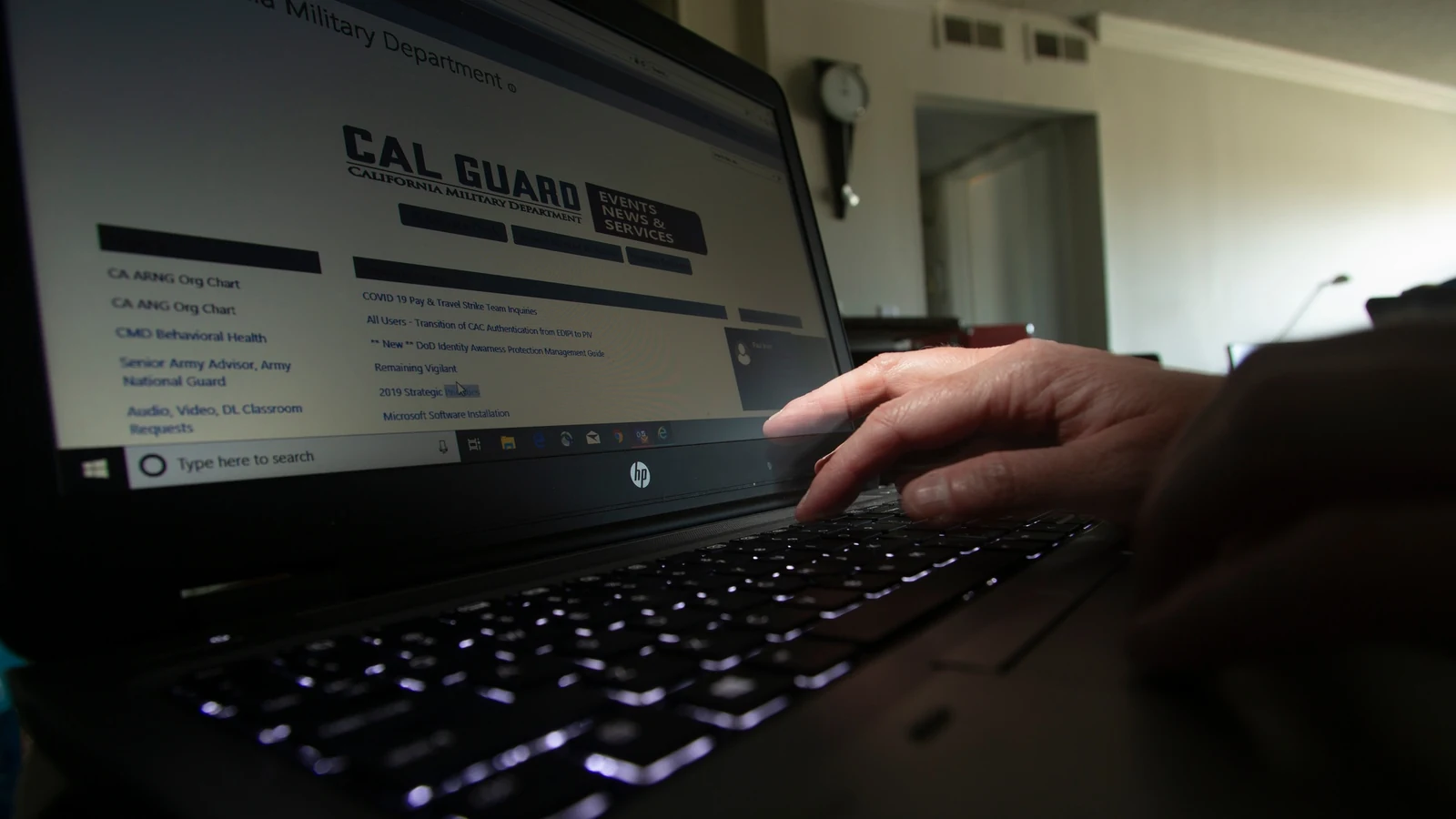
Two Labor Department opinion letters draw a sharper line around a question created by split workdays: when does moving between home, an office and a client site count as paid time? The answer changes with what the employee is doing and why the travel occurs.
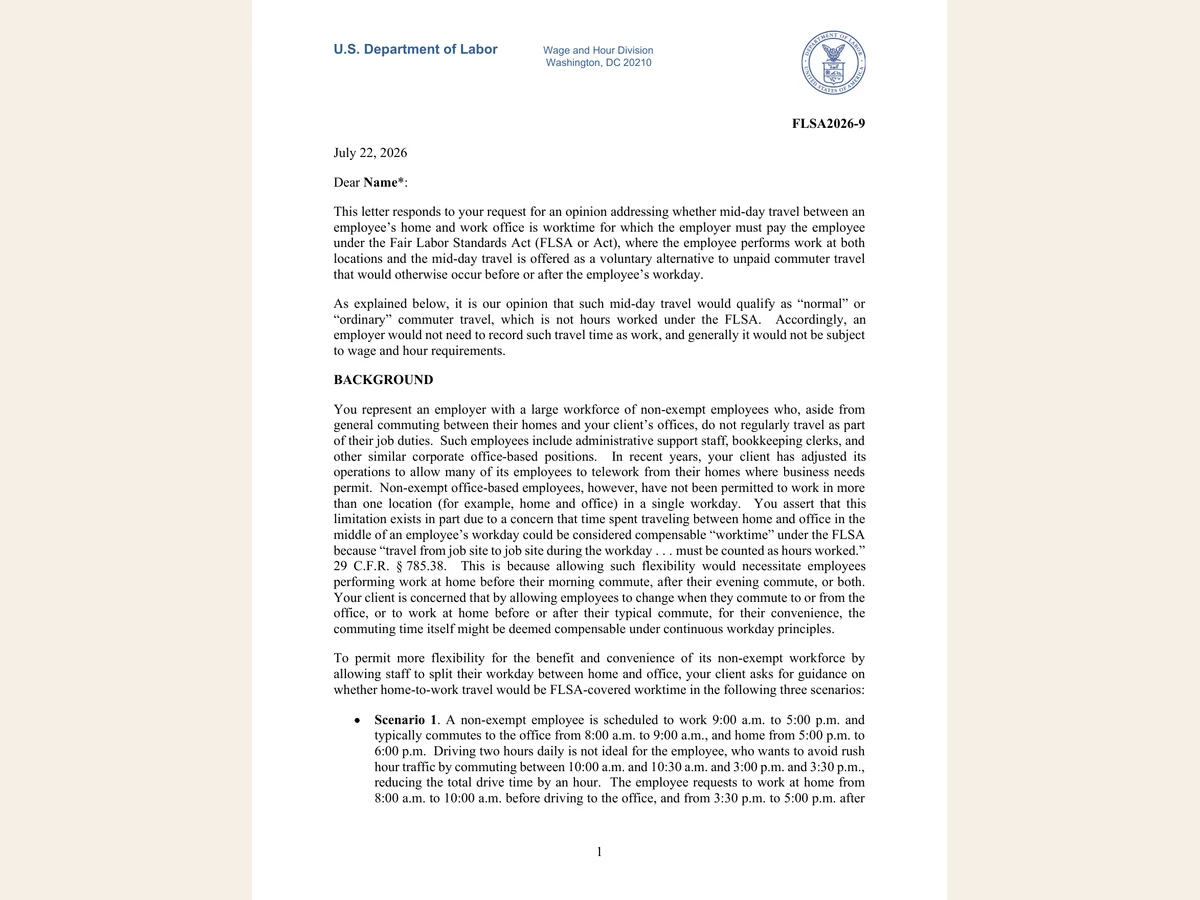
In FLSA2026-9, the Wage and Hour Division considered nonexempt office employees who voluntarily rearrange a normal commute so they can work at home before or after time in the office. The division concluded that the mid-day trip can remain an ordinary, unpaid commute under the scenarios and assumptions presented.
That conclusion is narrower than a rule that all home-to-office travel is unpaid. The letter relies on the travel being a voluntary alternative to the same commute that otherwise would occur before or after the workday, and on the employees not regularly traveling as part of their duties.
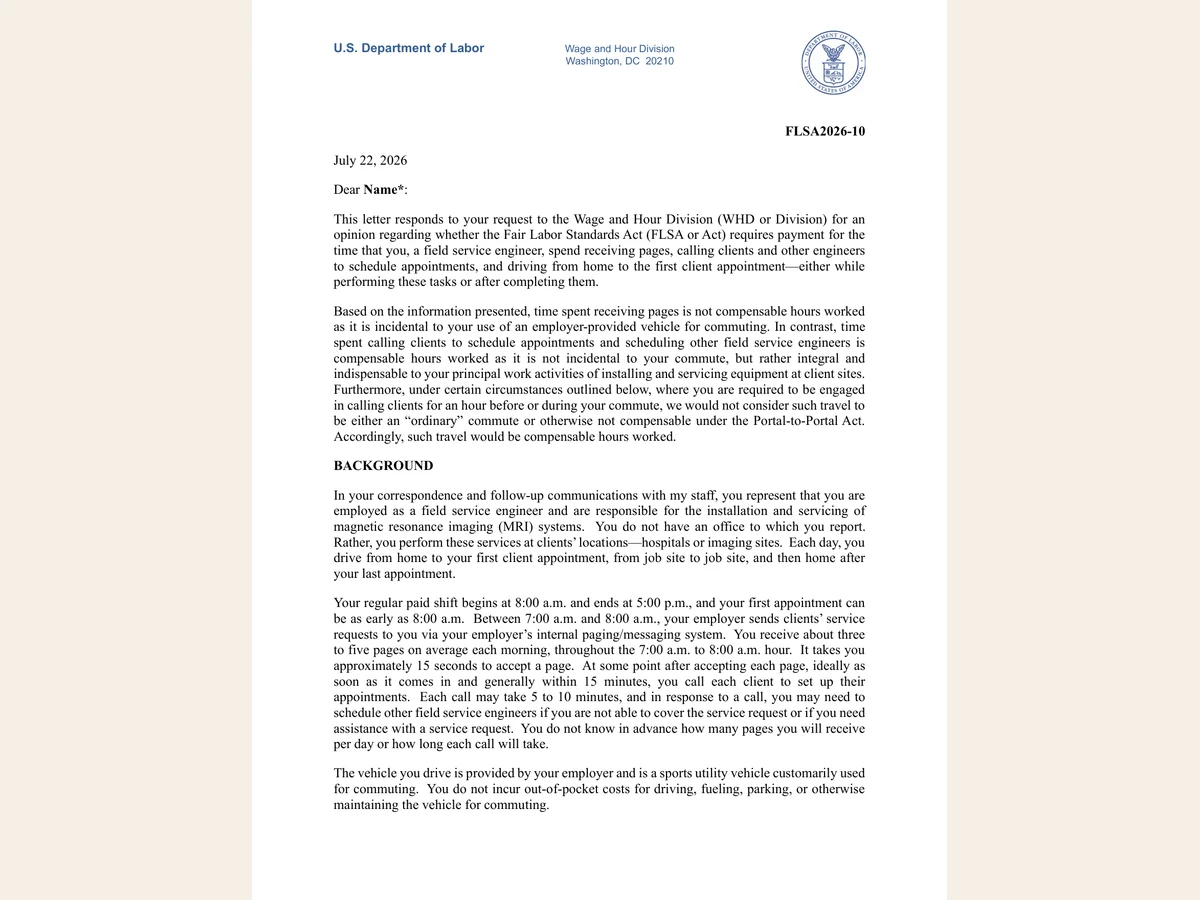
The second letter reaches a different result for some pre-shift activity by a field service engineer. Accepting brief pages was treated as incidental to use of an employer-provided vehicle for commuting and therefore not compensable on the stated facts.
Calling clients to schedule appointments and coordinating other engineers was different. The division said those calls were integral and indispensable to the employee’s principal work of installing and servicing equipment, so the call time counted as hours worked.
Once required scheduling work begins, travel can also change character. FLSA2026-10 says driving after those duties may be compensable in some circumstances, including when the employee is required to continue calling clients while traveling or when the travel follows work that starts the continuous workday.
The pair matters because a clock and a location do not decide compensability by themselves. A task that is merely incidental to a commute may remain outside paid time, while a task central to the job can start the workday and affect the status of later travel.
Opinion letters apply the department’s enforcement view to the facts supplied by a requester. Employers and workers should not treat the two documents as a blanket judgment covering every hybrid schedule, employer vehicle, interruption or state wage law.
The practical audit is factual: identify who chose the split schedule, whether travel is part of the job, what work occurs before departure, whether the employer requires activity during the drive and when the employee is relieved of duties. Small changes in that sequence can change the result.
For hybrid-work policies, the safest takeaway is not that a mid-day commute is automatically unpaid. It is that ordinary commuting and principal work remain separate categories—and employers need accurate records when required tasks blur the boundary.