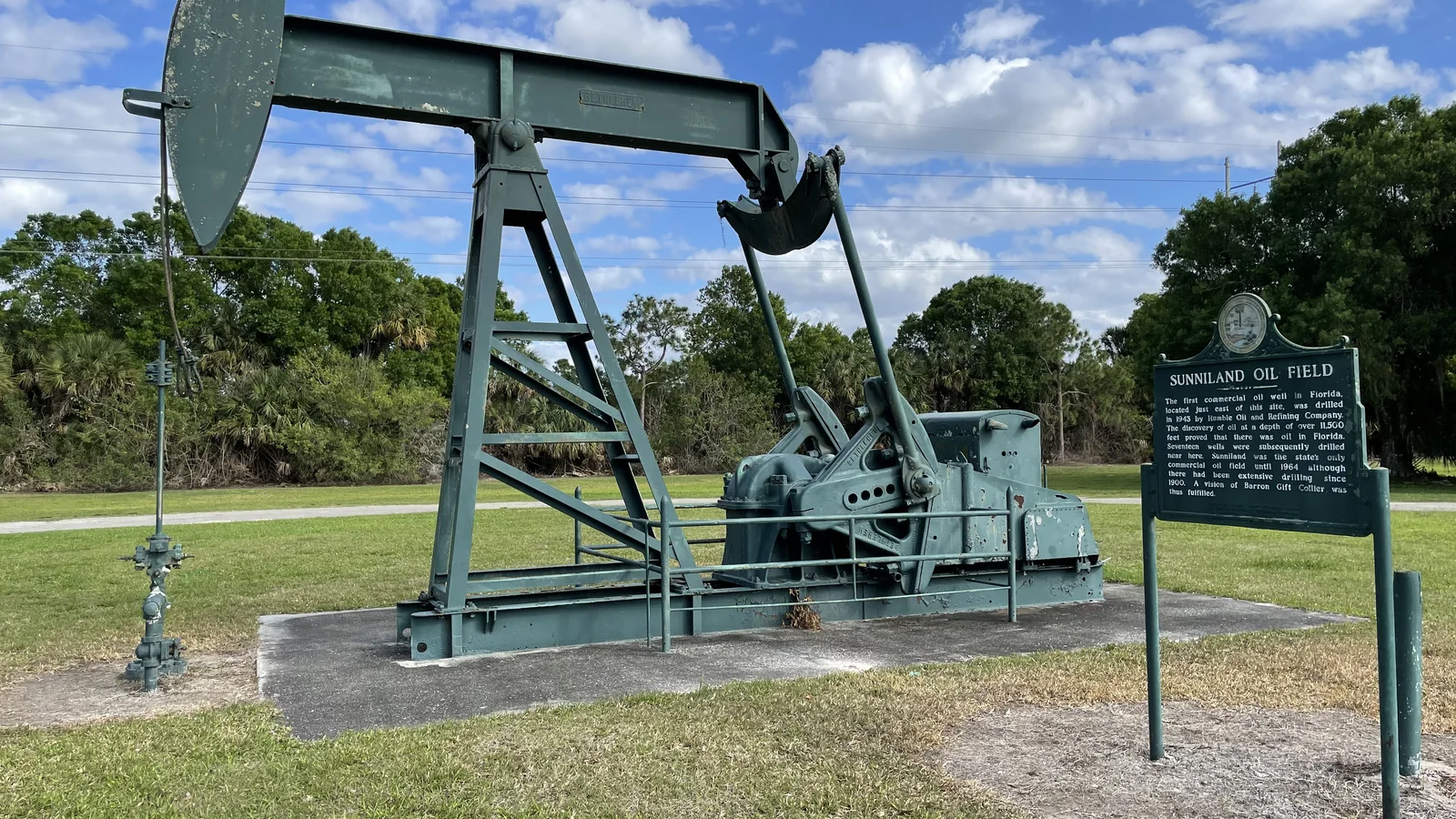
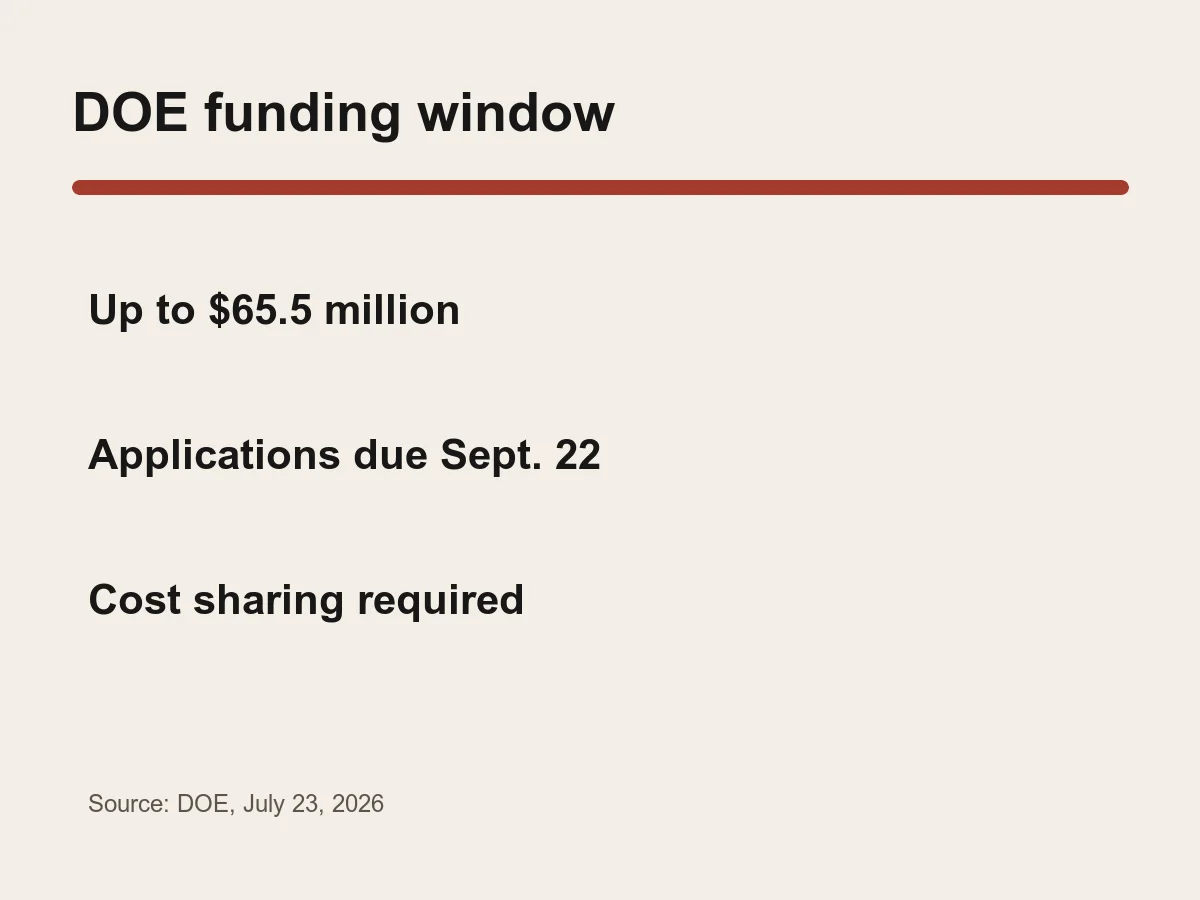
The U.S. Department of Energy has opened a cost-shared funding opportunity of up to $65.5 million for technologies intended to improve domestic oil and natural gas production, delivery infrastructure and operational efficiency.
Applications for notice DE-FOA-0003634 are due Sept. 22, 2026, at 5 p.m. Eastern, according to DOE's announcement and open-opportunities page. Applicants must follow the full notice for eligibility, cost-share and submission requirements.
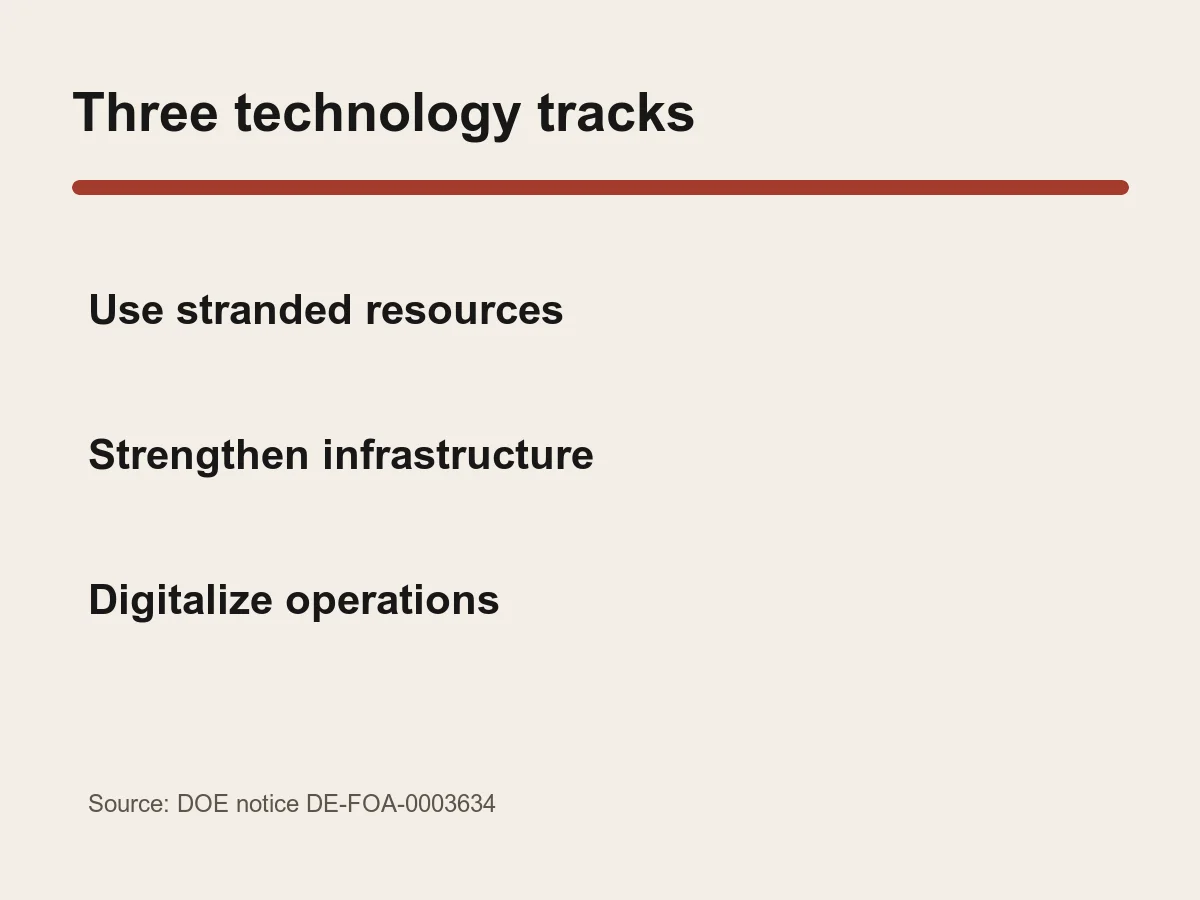
DOE divided the opportunity into three broad tracks. The first covers ways to convert stranded, flared or contaminant-limited oil and gas streams into products that can be transported and sold.
The second focuses on infrastructure durability and reliability, including compressors, valves, piping, tanks, coatings, alloys and other components intended to reduce product losses and strengthen delivery systems.
The third covers digital operations and full-scale test sites. DOE lists continuous monitoring, AI-supported digital twins and infrastructure-optimization systems among the possible technologies for upstream and midstream facilities.
A funding notice is an invitation to compete, not an award. The $65.5 million figure is a maximum program amount, and the announcement does not establish which applicants, sites or technologies will ultimately receive money.
Cost sharing means federal funds will not necessarily cover the entire project. Applicants need to use the official notice to determine the required share for their topic and whether proposed expenses are eligible.
DOE framed the program around production, reliability and reduced waste. Those goals can pull in different directions, so later selections should be evaluated against measurable outcomes such as product loss, equipment performance, monitoring accuracy and operating cost—not promotional claims alone.
The near-term accountability point is the Sept. 22 deadline. The later points will be the selected projects, federal and nonfederal contributions, test conditions and public evidence that a technology performed as proposed.