
A July executive order directs the U.S. defense department to sharply restrict waivers that allow specified critical materials from non-allied foreign countries into military supply chains.
Executive Order 14415 says that on January 1, 2027, the defense secretary and military-department secretaries must stop issuing most waivers under 10 U.S.C. 4872 unless a contractor submits a formal mitigation plan that the department accepts.
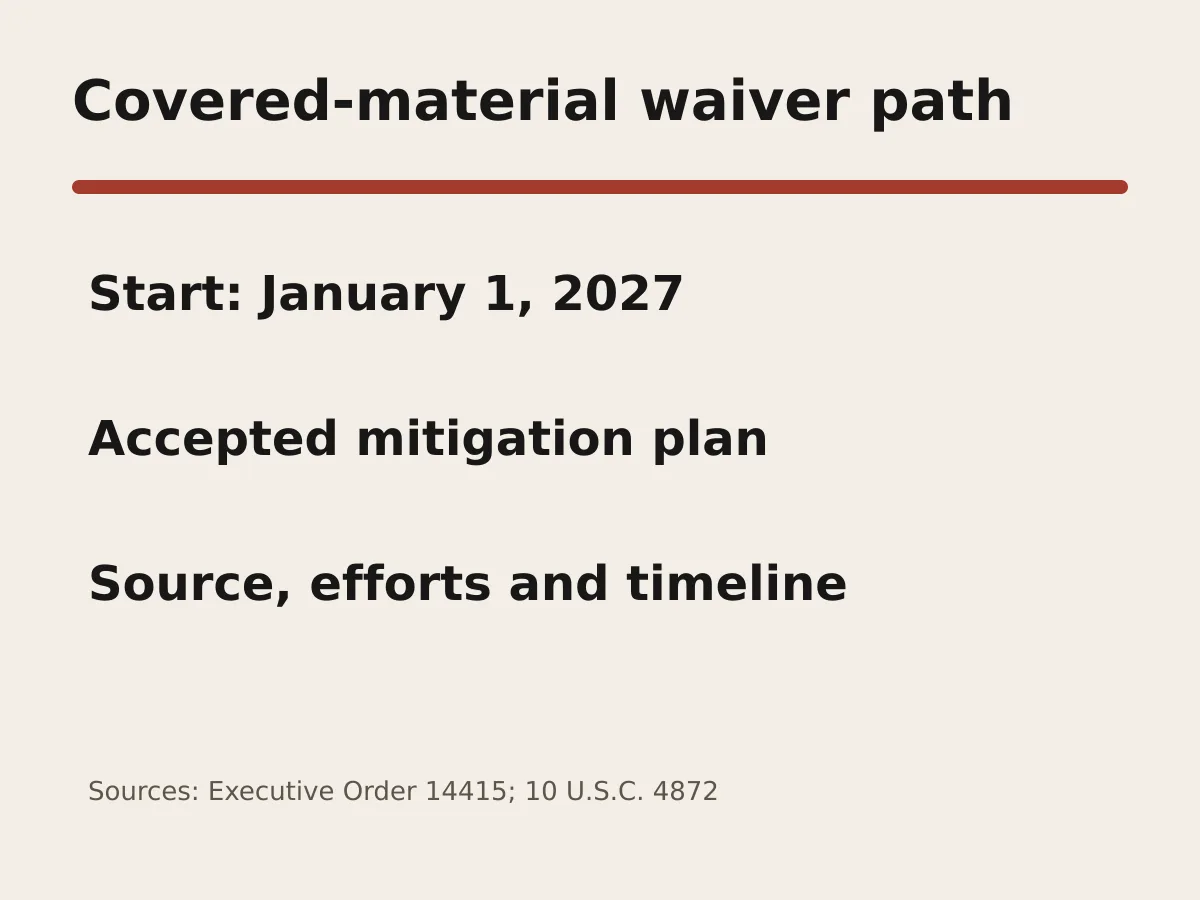
The plan must identify the noncompliant material's source, document exhaustive efforts to obtain compliant material or show that none was available, describe how the material will be removed from the supply chain and set a strict implementation timeline.
The order says failing to qualify a domestic source does not by itself establish non-availability. An exception applies when a contractor demonstrates active, adequately funded and continuing efforts to qualify one.
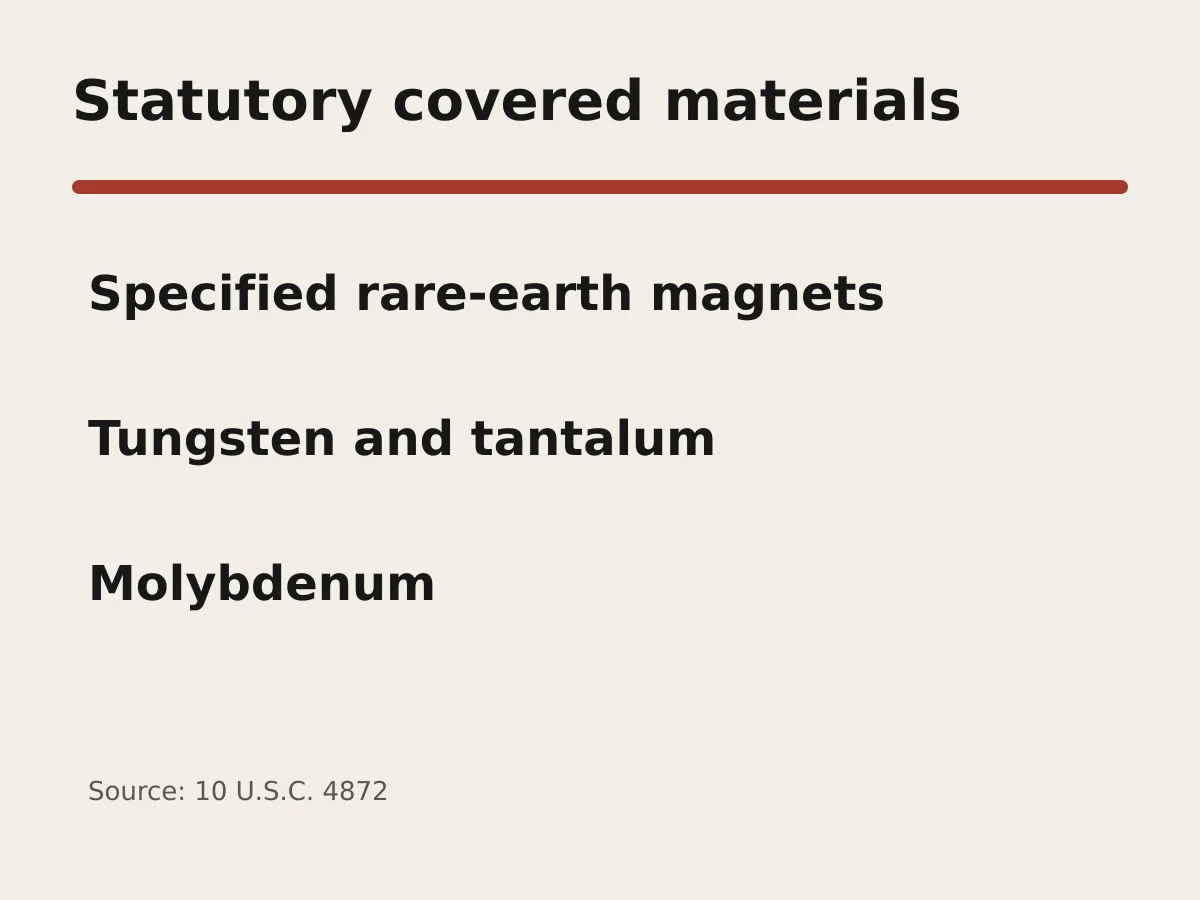
The underlying statute generally bars the department from procuring covered materials made in specified non-allied countries, subject to exceptions. Its current preliminary text defines covered materials to include samarium-cobalt and neodymium-iron-boron magnets, tungsten products, tantalum and molybdenum.
The order also calls for new supply-chain mapping rules. Within 180 days, the department must develop policy and implementation guidance requiring contractors to trace critical supply chains from raw materials to end products. Implementing regulations are due within 90 days after that work is completed.
Those future regulations are supposed to account for small businesses, nontraditional defense companies and new entrants. The order does not itself provide a cost estimate or quantify how many contracts or suppliers will be affected.
Separate provisions direct the department to accelerate qualification of alternative sources, review an electronic-device exemption and report every six months through January 1, 2028 on waivers, mitigation plans and regulations.
The sourcing and security judgments stated in the order are administration policy findings. Practical effects will depend on later guidance, rulemaking, individual mitigation plans, appropriations and implementation consistent with existing law.