
A federal electronic-filing requirement is now in effect for importers of most regulated consumer products that need a certificate of compliance.
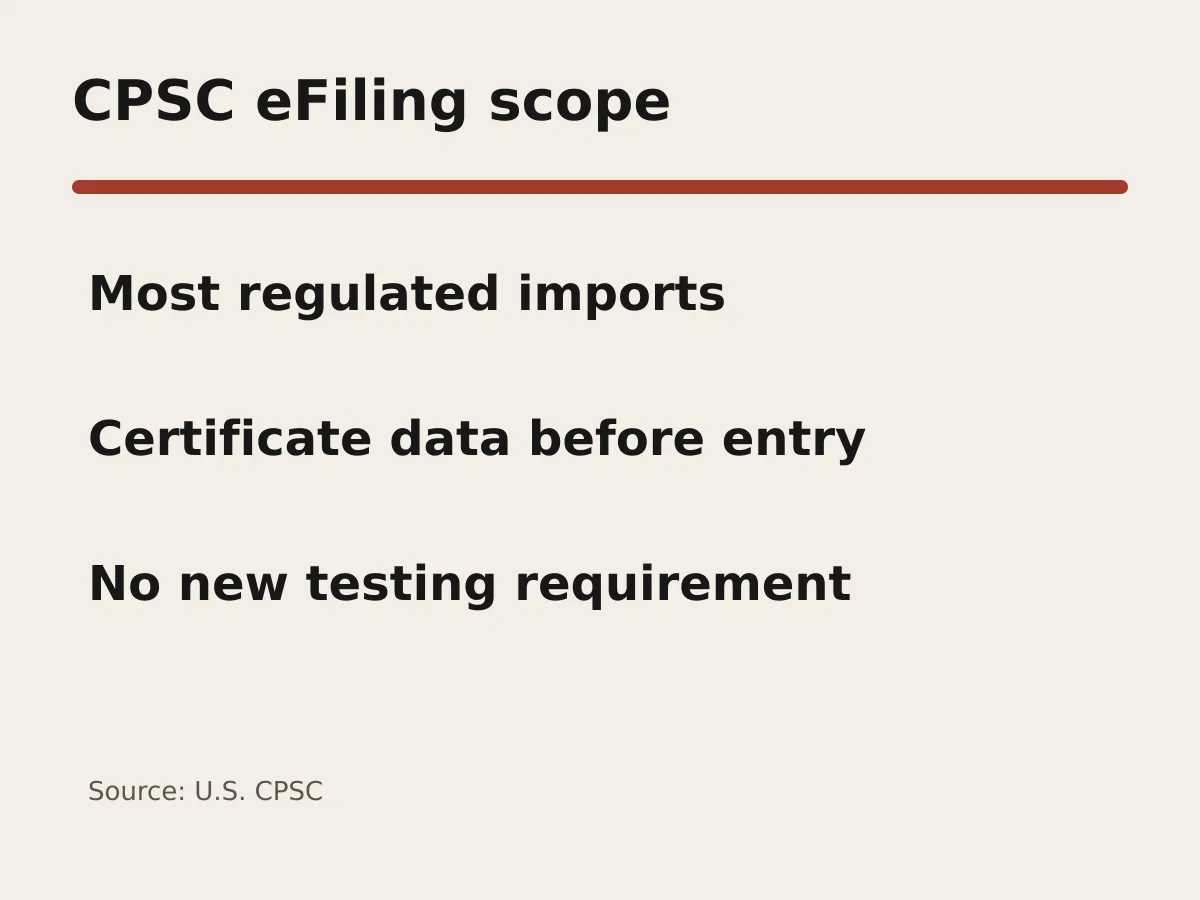
Since July 8, importers have had to transmit certificate data electronically through U.S. Customs and Border Protection before covered goods enter U.S. commerce, according to the Consumer Product Safety Commission.
The filing identifies the finished product, the party certifying compliance, each applicable safety rule, manufacturing information, the most recent compliance test, and the person who maintains test records.
CPSC says receiving those fields before entry lets it target higher-risk shipments while reducing unnecessary inspections and delays for importers with compliant records. That is the agency's stated enforcement objective, not a guarantee that every unsafe shipment will be detected.
The requirement applies to imported products subject to mandatory safety standards. CPSC guidance says importers of most regulated consumer products must file through the customs Partner Government Agency message set.
The commission says the system creates no new testing or certification obligation and does not apply to domestic manufacturers as an import-filing requirement. Importers were already required to create and keep the underlying certificate information.
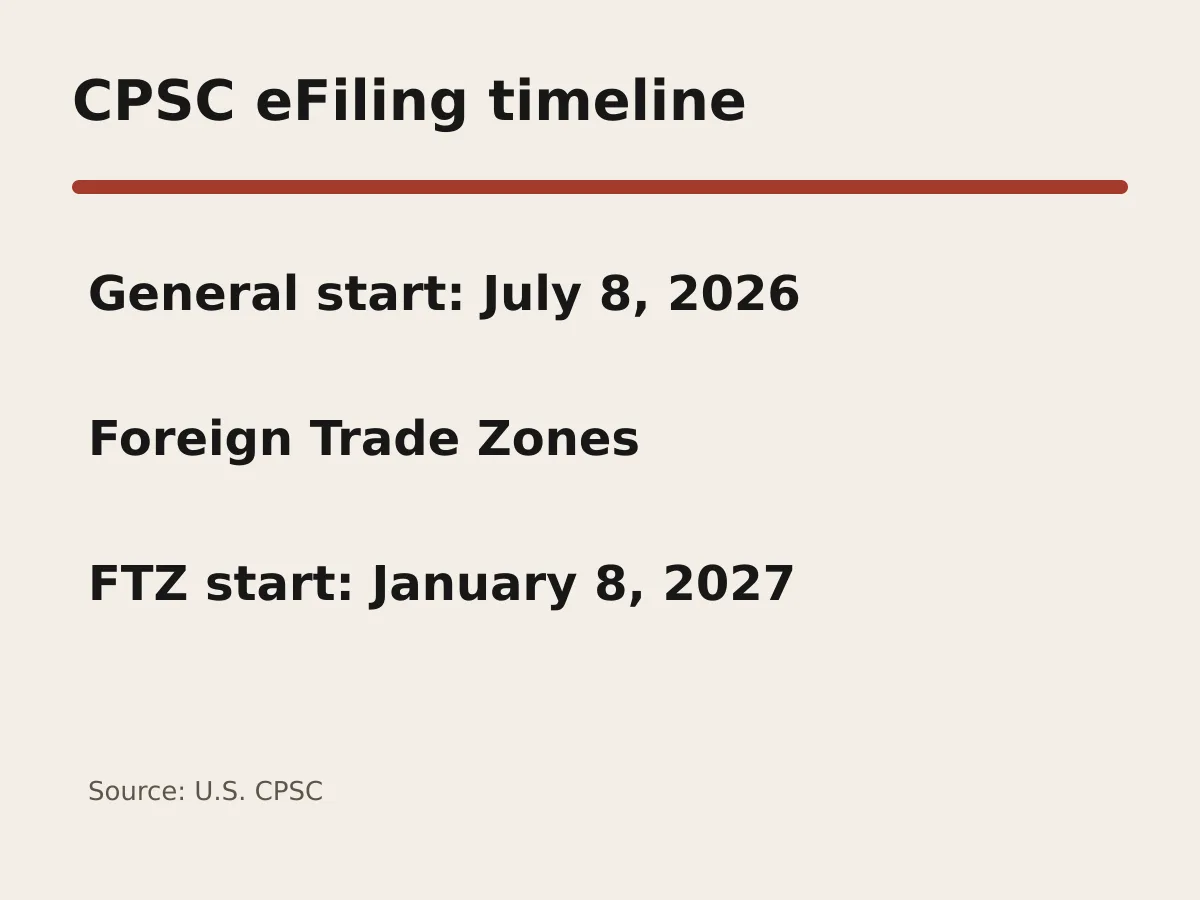
Products imported into a Foreign Trade Zone and later entered for consumption or warehousing follow a later date: Jan. 8, 2027.
The system followed alpha and beta pilots conducted from 2016 through 2024 and a voluntary implementation period intended to let importers test their processes.
For businesses, the immediate change is how existing compliance data reaches the government and when. Whether a particular product requires certification still depends on the applicable CPSC rule, so the agency's product-specific guidance and final rule remain the controlling references.