
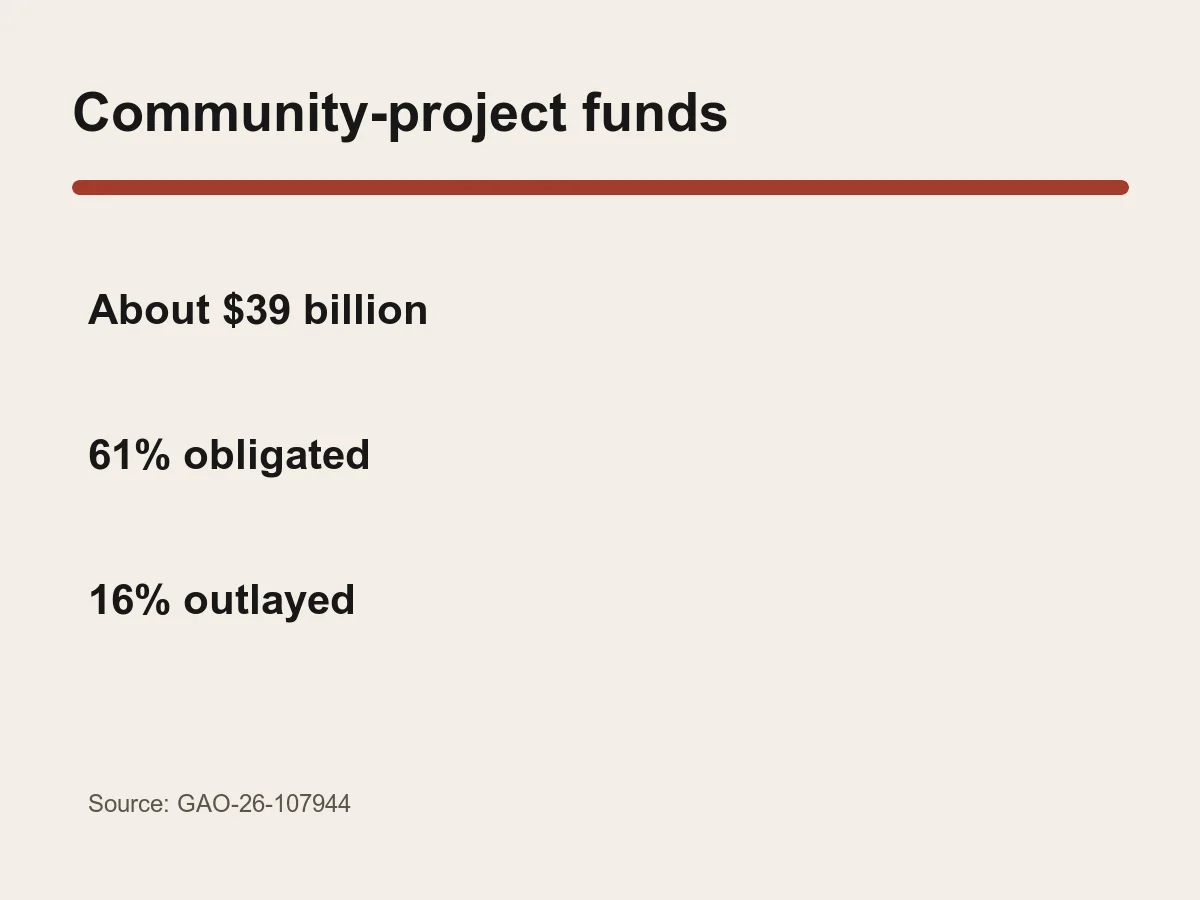
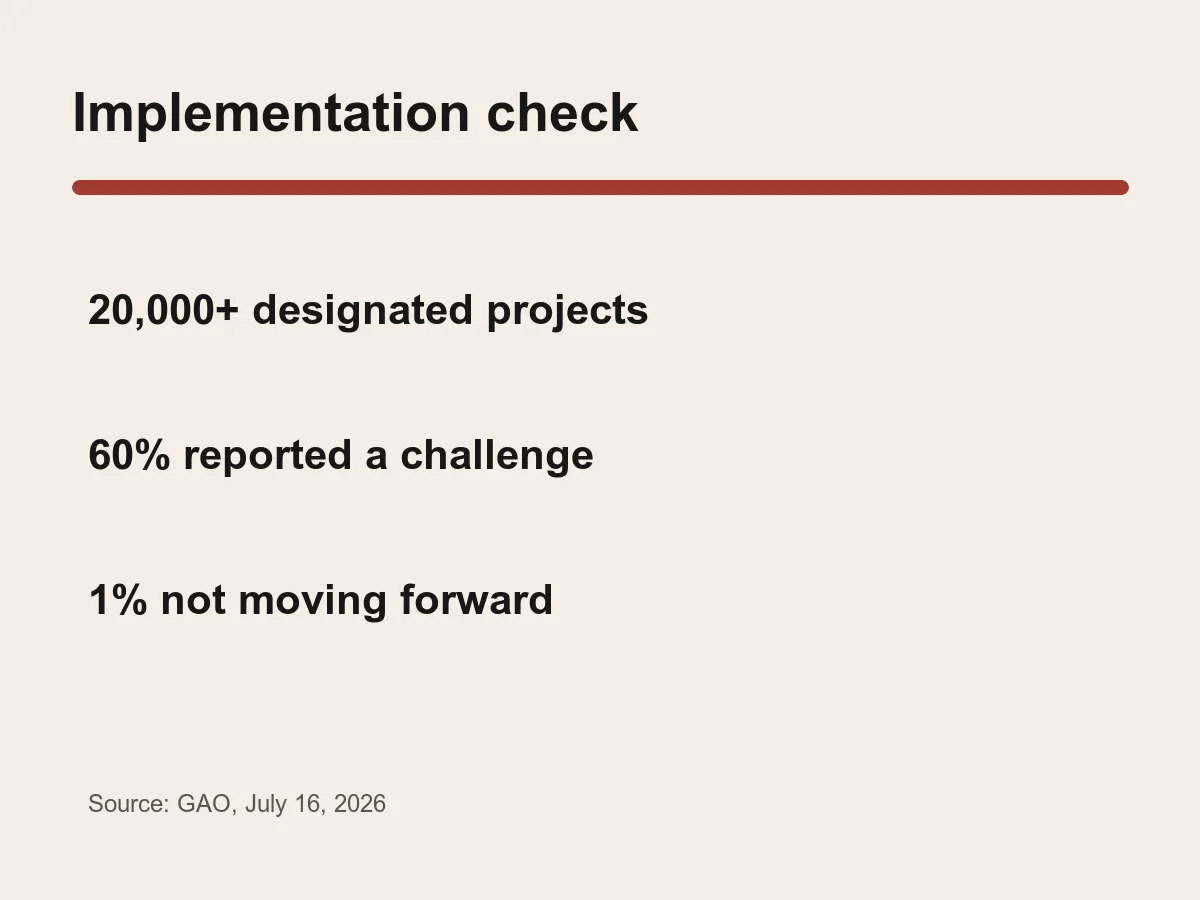
Congress designated about $39 billion for more than 20,000 community projects in fiscal years 2022 through 2024, according to a Government Accountability Office review of the revived appropriations practice.
By the end of fiscal 2024, federal agencies had obligated 61% of the designated money and outlayed 16%, GAO reported. An obligation is a legal commitment; an outlay is money actually paid, so the two measures describe different stages of delivery.
The projects span infrastructure, facilities, economic development, public services and other local priorities selected by members of Congress. The system is also known as congressionally directed spending or community project funding, depending on the chamber and account.
GAO found that about 1% of the projects were not moving forward. That share is small, but it represents projects that may require rescission, reprogramming or other congressional and agency action before designated funds can be resolved.
Implementation challenges were more common. Sixty percent of recipients in GAO's sample reported at least one problem, including rising costs, administrative requirements, delayed agreements, matching-fund demands or changes in project scope.
The audit drew on a sample of 790 projects, interviews with 167 recipients and 36 site visits. Those methods provide detailed evidence, but the recipient findings are not a census of every project in the $39 billion portfolio.
Sixteen of the 19 agencies administering these funds also identified oversight challenges. Agencies must apply the rules of varied grant, procurement and infrastructure programs to projects selected through appropriations rather than through a single competitive program.
The 16% outlay rate should not automatically be read as evidence that the remaining money was lost or idle. Multi-year construction and grant projects often pay after milestones, though slow obligations or unresolved scopes can still delay public benefit.
The next accountability checkpoints are project-level status, final costs, completed outputs and explanations for cancellations. Those records will show whether the designated money produced the local results Congress and recipients described.