
The Centers for Medicare & Medicaid Services has proposed a voluntary pathway intended to coordinate Medicare coverage decisions with Food and Drug Administration review for selected breakthrough medical devices.
The Regulatory Alignment for Predictable and Immediate Device, or RAPID, pathway would be open to certain Class II FDA Breakthrough Devices enrolled in the Transitional Coverage for Emerging Technologies program and to Class III Breakthrough Devices whether or not they are enrolled in that program.
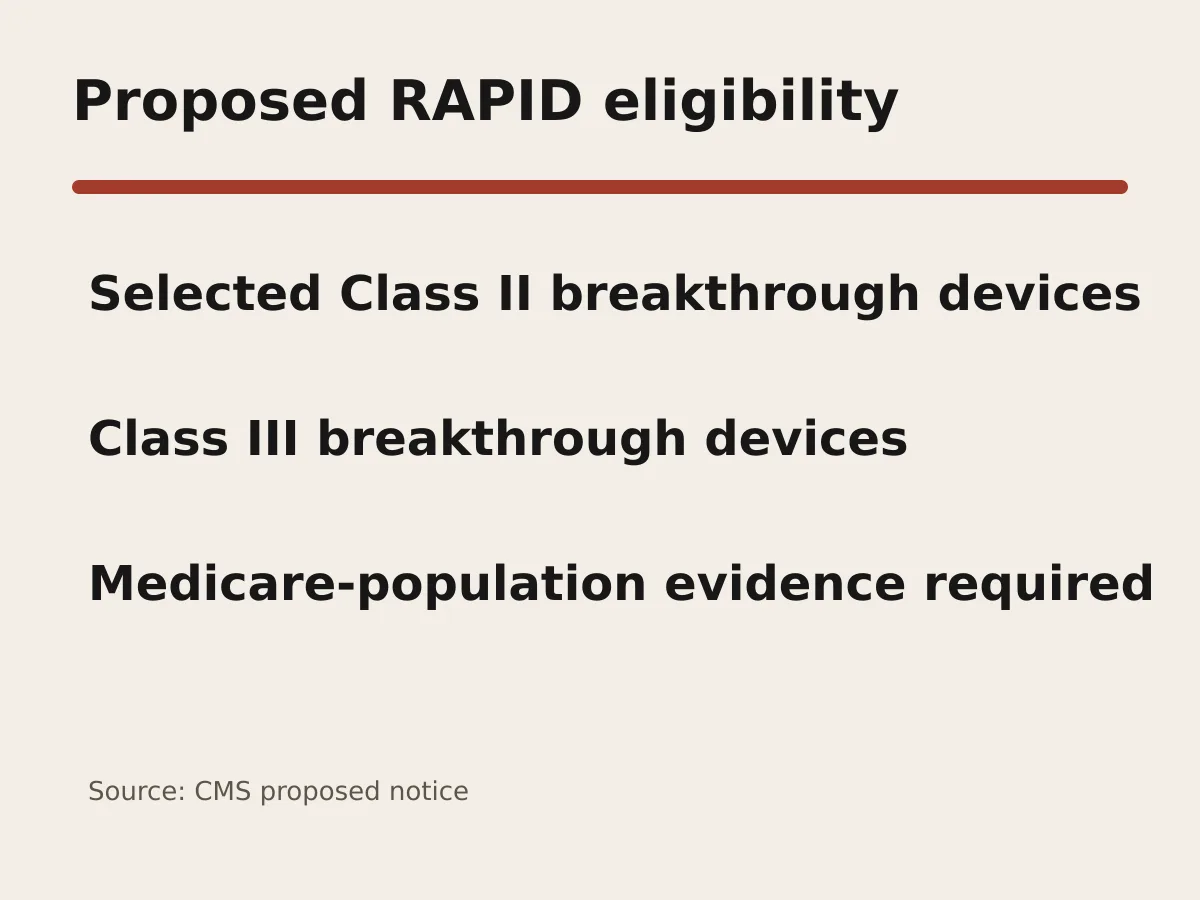
Participation would not make coverage automatic. A device would need to enter the pathway by the investigational-device-exemption presubmission stage, include Medicare beneficiaries in its evidence plan and study health outcomes agreed upon with FDA and CMS.
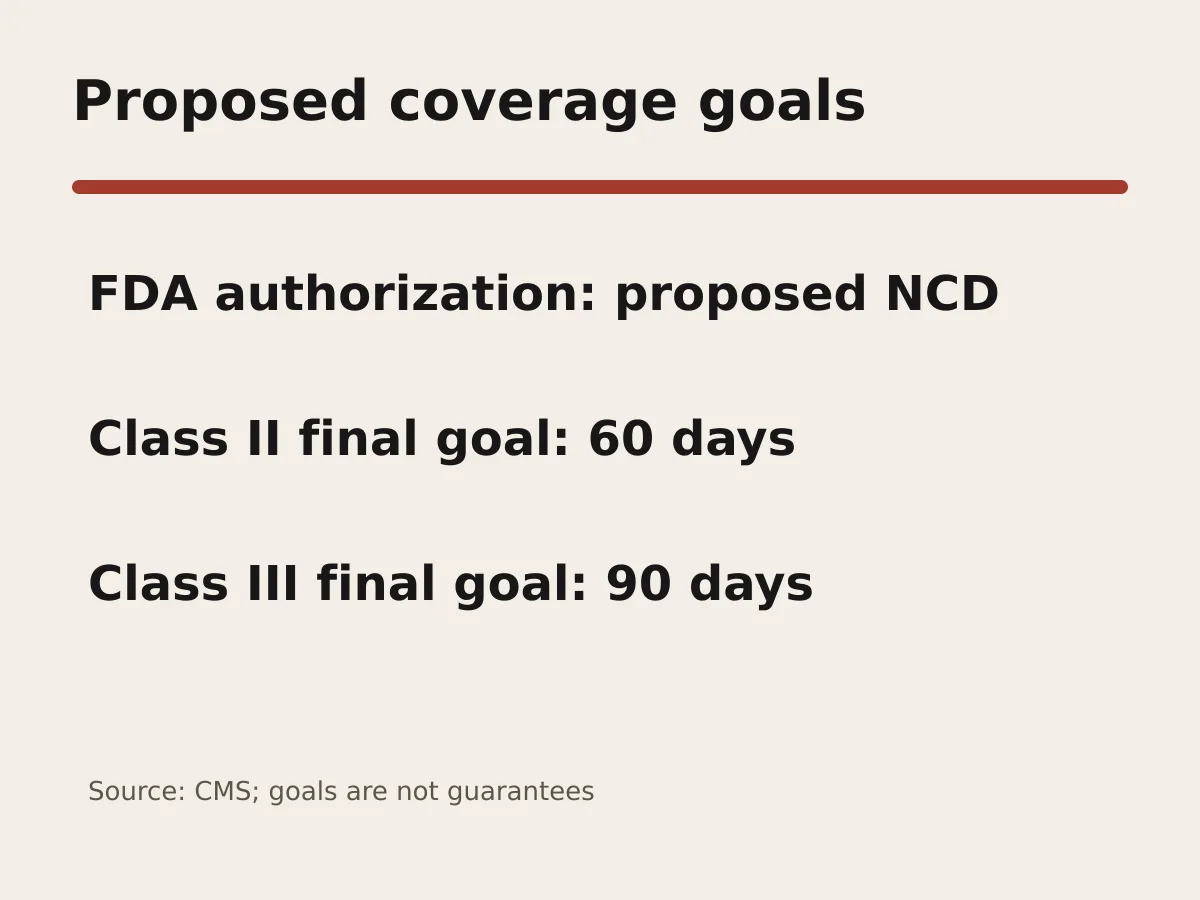
When CMS concludes that the evidence is sufficient, the agency proposes posting a national coverage determination on the same day FDA grants market authorization. CMS describes that first document as a proposed coverage determination, not the final decision.
The agency's stated goal is to issue a final national coverage determination as soon as 60 days after authorization for eligible Class II devices and 90 days after authorization for eligible Class III devices. Those are proposed goals rather than guaranteed deadlines.
The proposal is designed to let manufacturers address FDA safety-and-effectiveness questions and Medicare coverage evidence needs through a coordinated development plan. The agencies have different legal responsibilities, so FDA authorization alone would still not establish Medicare coverage.
CMS says the pathway would focus on products that can generate evidence relevant to the Medicare population. A study that does not enroll Medicare beneficiaries or measure the agreed outcomes would not satisfy the proposed evidence conditions merely because the product carries breakthrough designation.
The notice seeks public comment through Oct. 13, 2026. CMS can revise or decline the proposal after reviewing comments, and no device can use RAPID unless a final pathway is established.
For patients and clinicians, the proposal is a coverage-process change rather than a medical recommendation. Individual coverage would still depend on the final national determination, benefit rules and the circumstances of care.