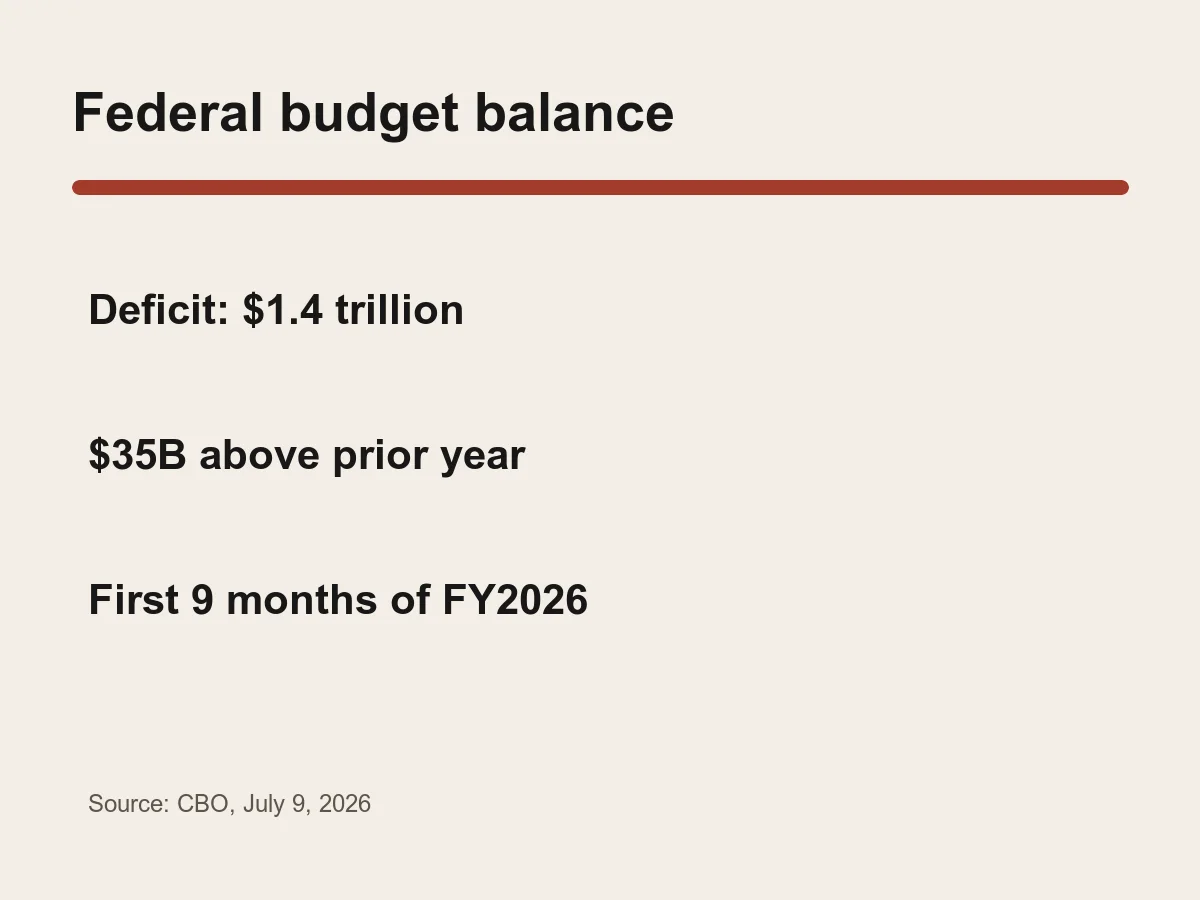
The federal budget deficit totaled an estimated $1.4 trillion in the first nine months of fiscal year 2026, according to the Congressional Budget Office's June monthly review.
That cumulative shortfall was $35 billion larger than the deficit recorded over the same October-through-June period of fiscal 2025. CBO's figures are estimates based on the government's daily cash reports and other available data.
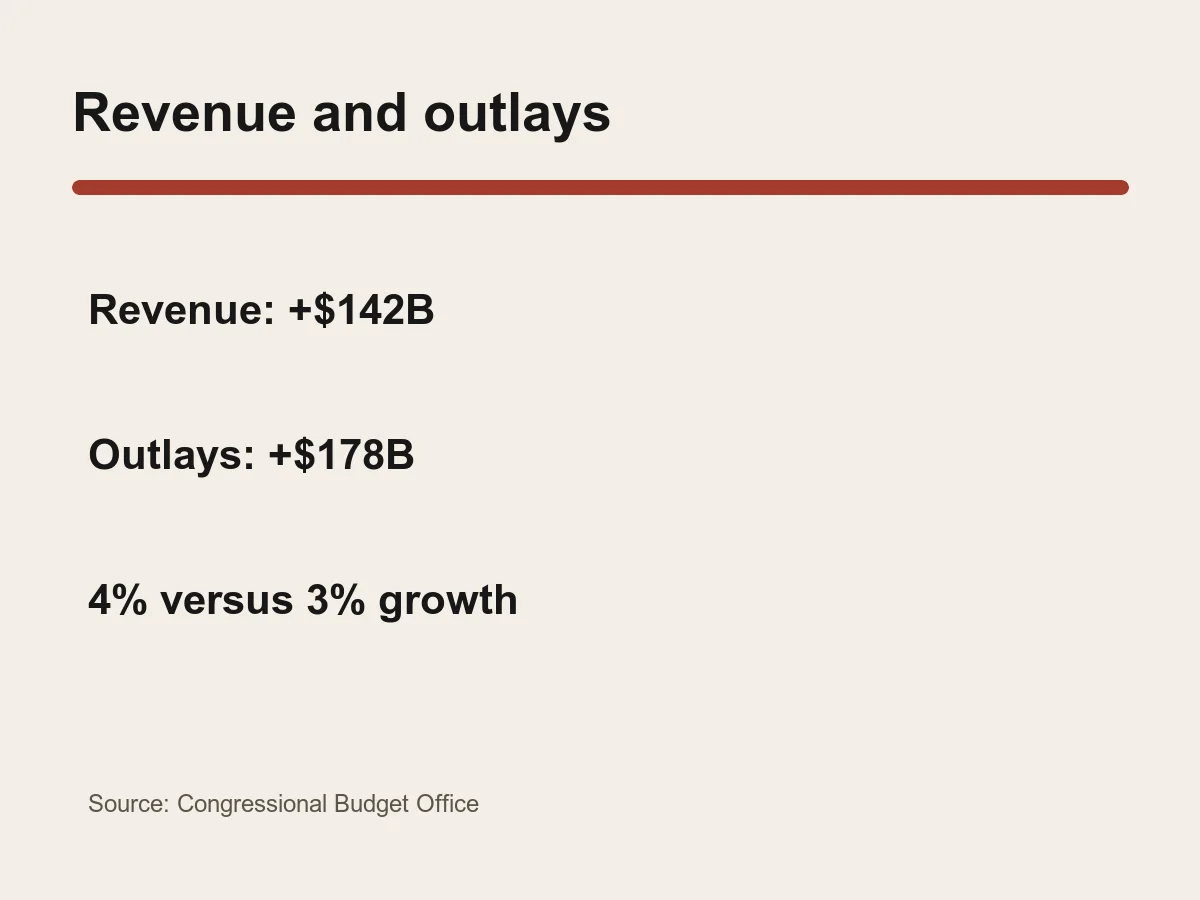
Federal revenues rose by $142 billion, or 4%, from the comparable prior-year period. Outlays increased by $178 billion, or 3%, and the larger dollar increase in spending widened the deficit despite the revenue growth.
Percent changes and dollar changes answer different questions because the revenue and spending bases are not the same size. The 3% outlay rise produced a larger dollar change than the 4% revenue rise.
The $1.4 trillion figure covers nine months, not the entire fiscal year. Federal fiscal 2026 runs through Sept. 30, so July, August and September receipts and payments will change the final annual total.
Monthly budget results can be affected by calendar shifts that move scheduled payments or tax deadlines across month boundaries. CBO's full report provides adjustments and category-level detail needed to interpret those timing effects.
A deficit is the amount by which federal outlays exceed revenues during the measured period. It is not the same as the total federal debt, which reflects accumulated borrowing and other financing over time.
CBO's monthly review is an early accounting estimate rather than the Treasury Department's final year-end statement. Later administrative data can revise individual categories or the overall balance.
The next useful checkpoints are CBO's July and August reviews and the final fiscal-year results. Together they will show whether the $35 billion year-over-year gap persisted, widened or narrowed in the closing quarter.