
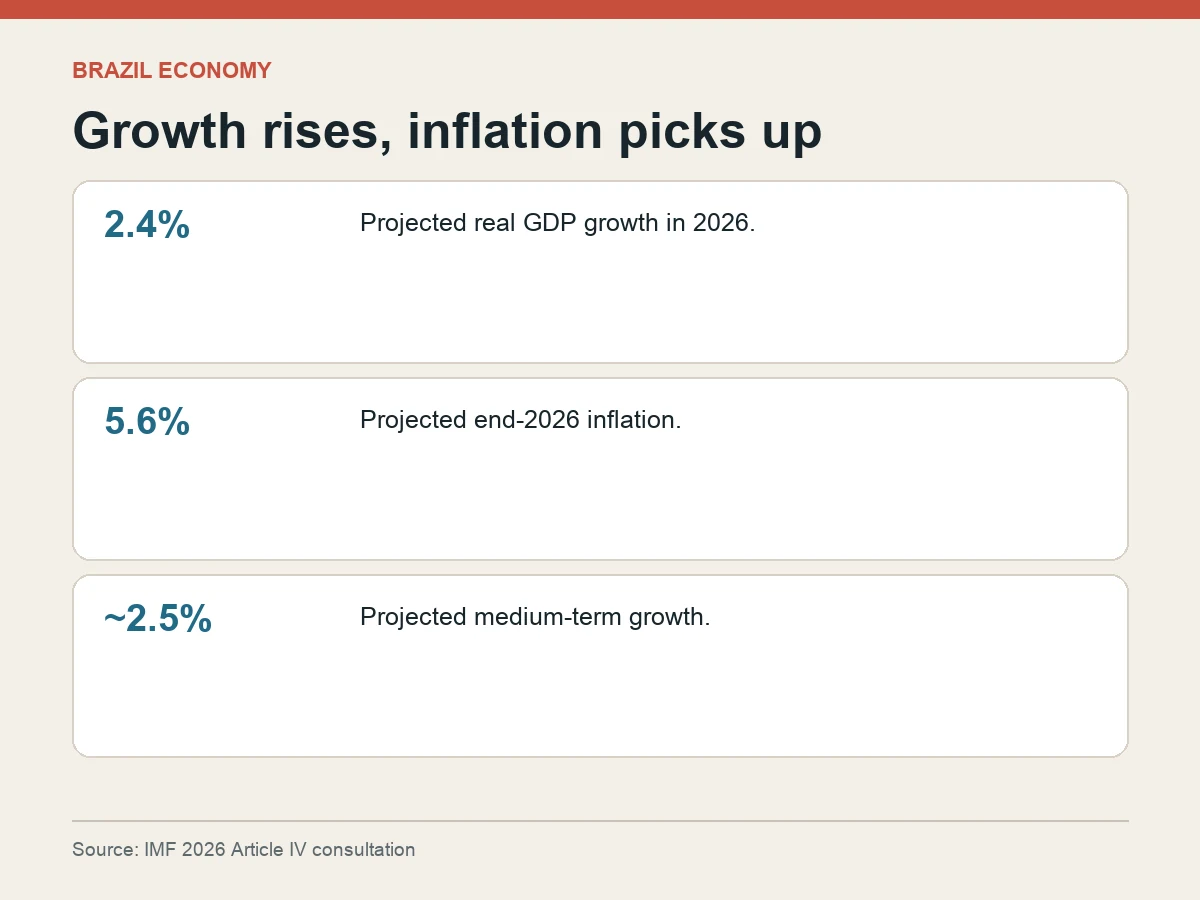
Brazil’s economy is projected to grow 2.4 percent in 2026 while inflation rises to 5.6 percent by year-end, according to the International Monetary Fund’s annual review of the country.
The IMF expects growth to settle around 2.5 percent over the medium term, supported by structural changes including implementation of Brazil’s 2023 value-added-tax reform. The assessment describes an economy that has remained resilient through repeated external shocks.
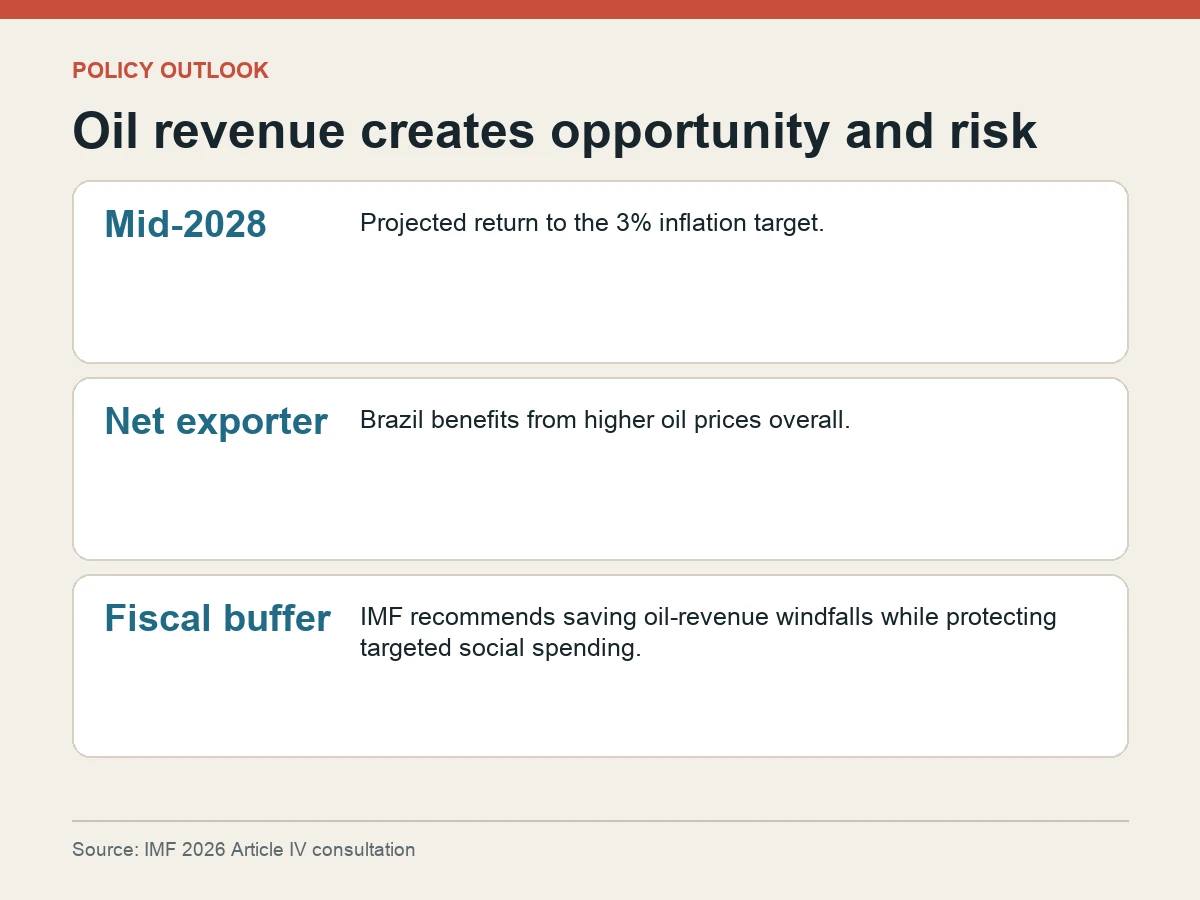
Oil is the central two-sided force in the outlook. Brazil exports more oil than it imports, so higher global prices improve national income and government revenue. The same prices raise fuel and other costs at home, lifting consumer inflation and complicating interest-rate decisions.
The IMF projects inflation will converge to the central bank’s 3 percent target around mid-2028. It said earlier interest-rate cuts were consistent with the established inflation-targeting framework while urging flexibility because the energy shock and global uncertainty could change the path.
Fiscal policy carries a similar tradeoff. The Fund recommends saving oil-related revenue windfalls and making a more ambitious fiscal effort so public debt moves onto a durable downward path. At the same time, it says targeted social spending and priority investment should be protected.
Saving a windfall can reduce pressure to spend temporary revenue as if it were permanent. It can also create a buffer if commodity prices reverse. But the recommendation leaves Brazil’s elected institutions to determine the precise mix of revenue, spending and investment.
The 2.4 percent growth and 5.6 percent inflation numbers are forecasts, not measurements. They depend on the duration of elevated oil prices, domestic demand, financial conditions, tax implementation and the global economy. A different energy path would change both sides of the projection.
Article IV consultations are the IMF’s regular surveillance process. The resulting policy advice is not a loan condition and does not bind Brazilian authorities; it is an external assessment reviewed by the Fund’s Executive Board.
The resulting picture is neither a simple commodity boom nor a conventional slowdown. Brazil gains as an exporter, faces higher prices as a consumer economy and must decide how much of the temporary public revenue to save while keeping investment and social protection intact.