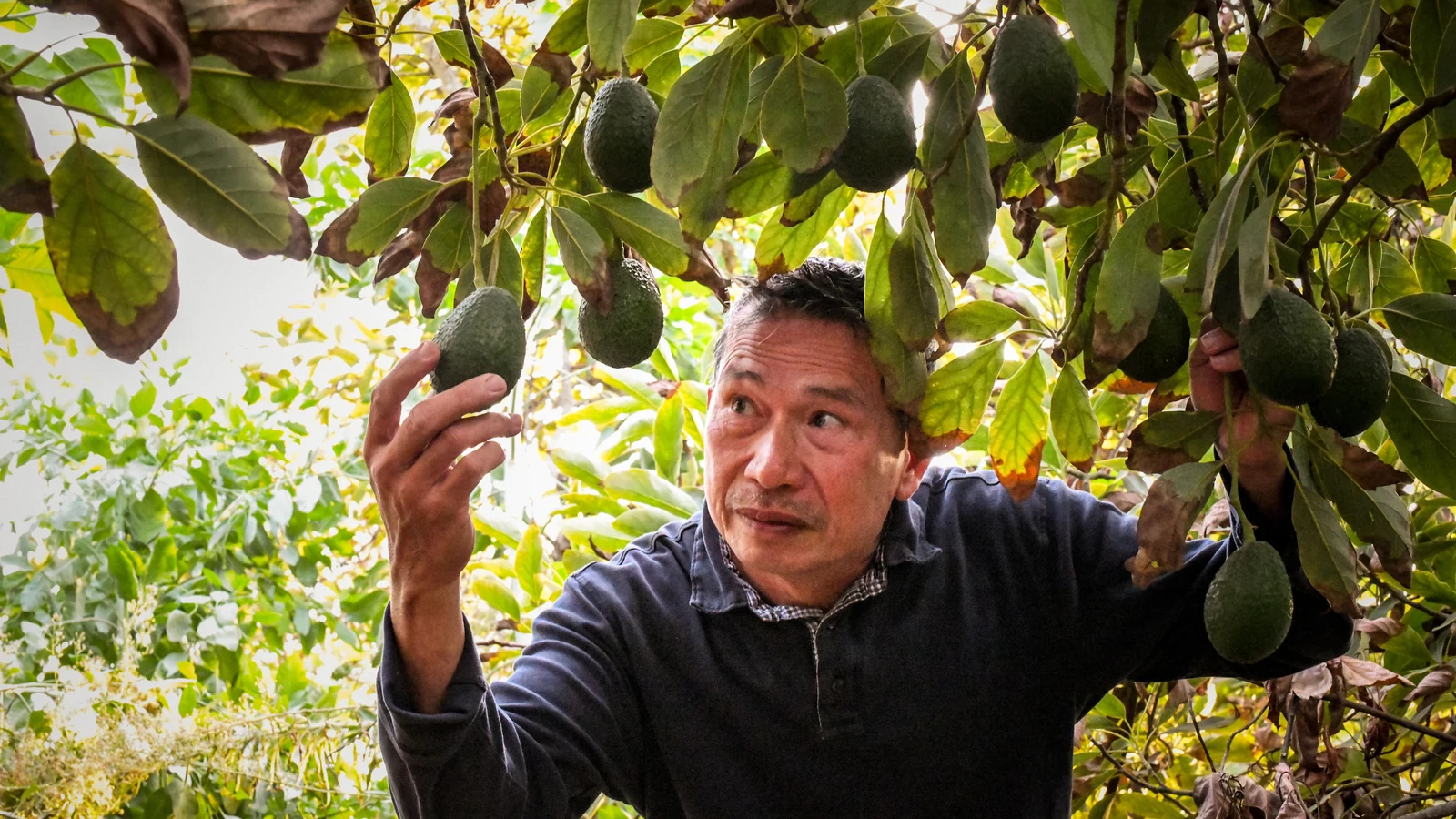
DNA from avocado trees in Nicaragua preserves evidence of a crop journey that likely began in South America about 5,000 years ago, according to new genetic and ethnobotanical research published in Plants, People, Planet.
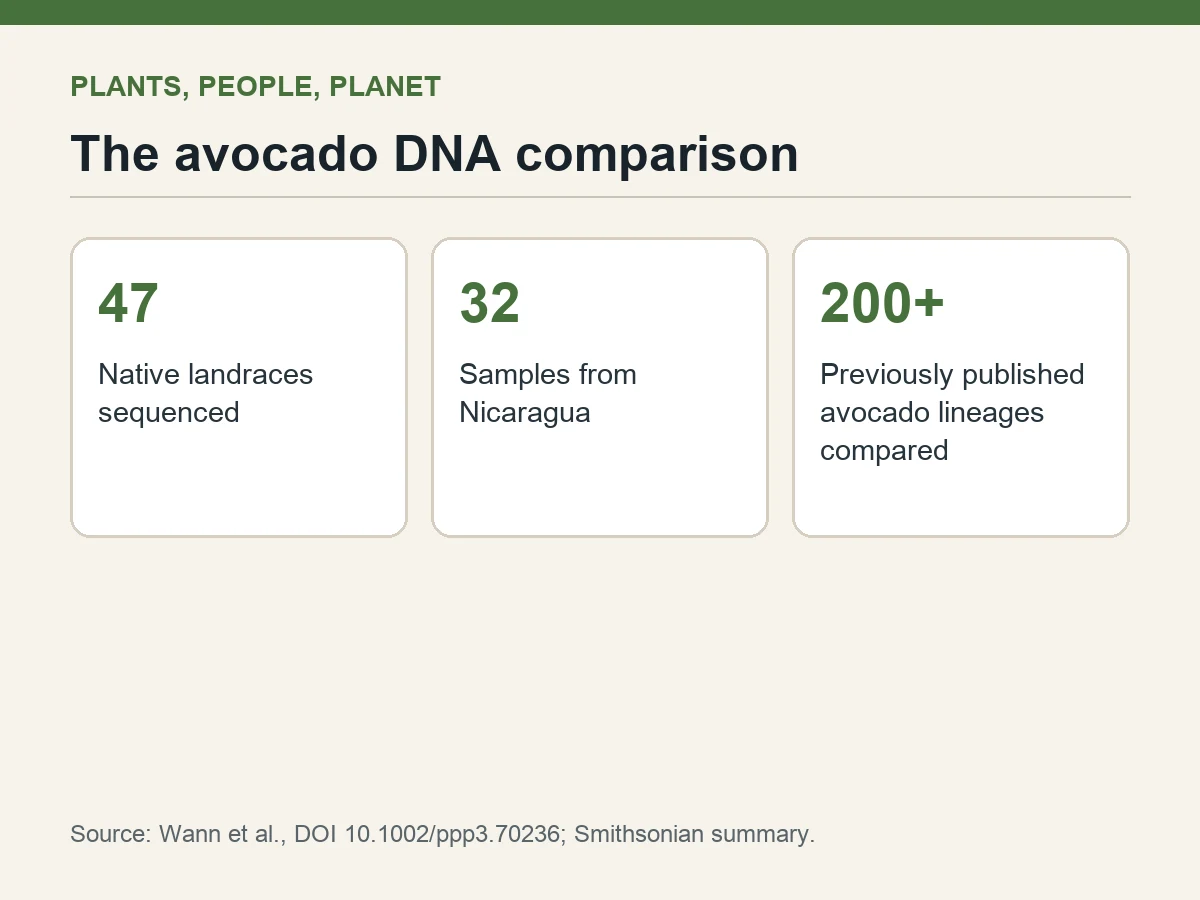
Researchers sequenced 47 native landraces—locally maintained crop varieties—including 32 from Nicaragua, with additional samples from Honduras and southern Mexico. They compared those genomes with published data from more than 200 other avocado lineages.
The lowland Nicaraguan samples were genetically tied to populations farther south, including coastal Colombia. Upland samples from southern Mexico and northern Nicaragua instead clustered closer to ancestral Mexican populations and commercial relatives.
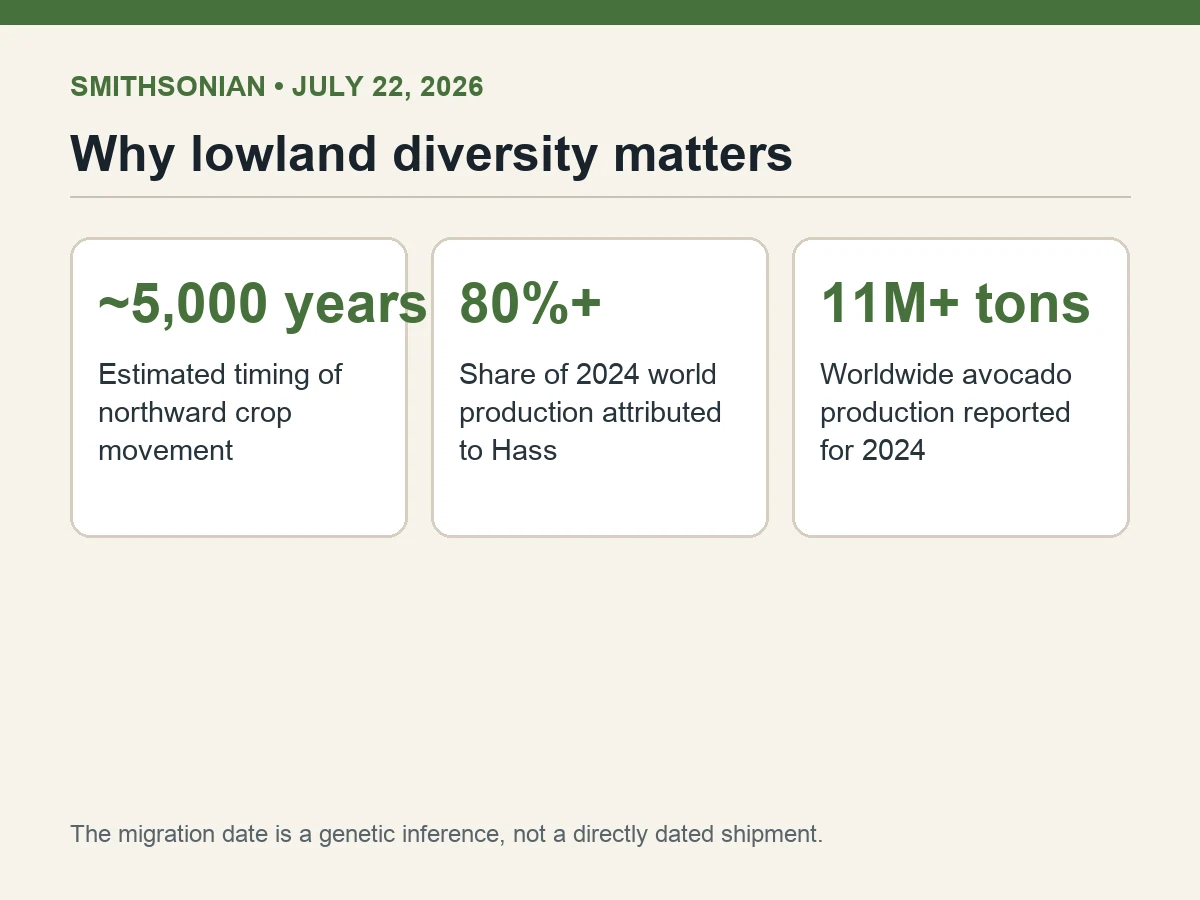
The team interprets that pattern as evidence that people carried avocado seeds north as communities and crops moved through the Americas. The estimated timing, roughly 5,000 years ago, aligns with archaeological appearances of other South American crops in Central America.
That date is an inference from population genetics and archaeological context, not a directly dated basket of seeds. The researchers describe repeated interchange across a connected landscape rather than one documented migration event.
The work also records living agricultural knowledge. Farmers and gardeners described how they maintain local varieties, use some as rootstocks and pair trees for pollination. Interviewed growers did not report Phytophthora root rot in the lowland landraces.
The absence of reported disease is not proof of immunity. It is an observational clue that the varieties, or their growing environments, may contain useful traits that warrant controlled testing.
The modern market makes that diversity consequential. Smithsonian reported that growers produced more than 11 million metric tons of avocados in 2024 and more than 80% were Hass, a variety propagated through clonal grafting. Genetic uniformity delivers consistent fruit but can concentrate vulnerability.
Some farmers told the researchers that traditional trees were being removed to make room for commercial varieties. Preserving the lowland landraces therefore protects more than an ancient story: it maintains genetic options that breeders may need as disease, temperature and rainfall pressures change.