
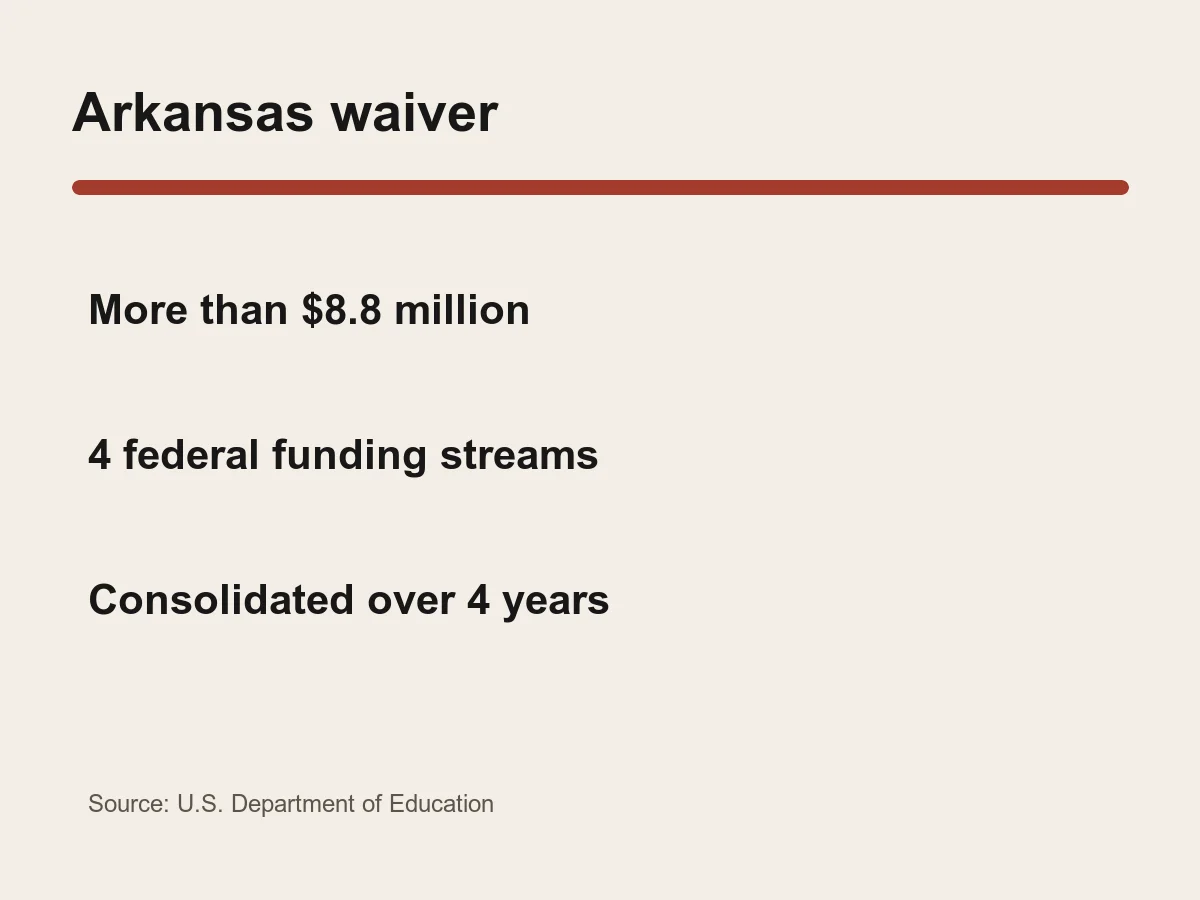
The U.S. Department of Education approved an Arkansas waiver that allows the state to consolidate more than $8.8 million in federal education funding over the next four years.
The Returning Education to the States waiver combines state-level activity funds from four Elementary and Secondary Education Act programs: Titles II-A, III-A, IV-A and IV-B.
Consolidation changes how Arkansas can manage the covered money; it does not create an additional $8.8 million appropriation. The funds remain subject to the waiver terms and continuing duties to support eligible students and programs.
The department also approved Arkansas as the 21st state with Ed-Flex authority. Ed-Flex permits the state to waive selected federal requirements for local education agencies without seeking a separate federal approval each time, within statutory limits.
Rural eligibility will expand so districts qualifying under the Rural and Low-Income School program can use an alternative fund-use authority previously limited to Small, Rural School Achievement eligibility.
For advanced students, Arkansas may count specified high-school assessment results taken before high school within its accountability system. The flexibility expands to grades five and six and to reading and language arts in grades five through eight under the approved terms.
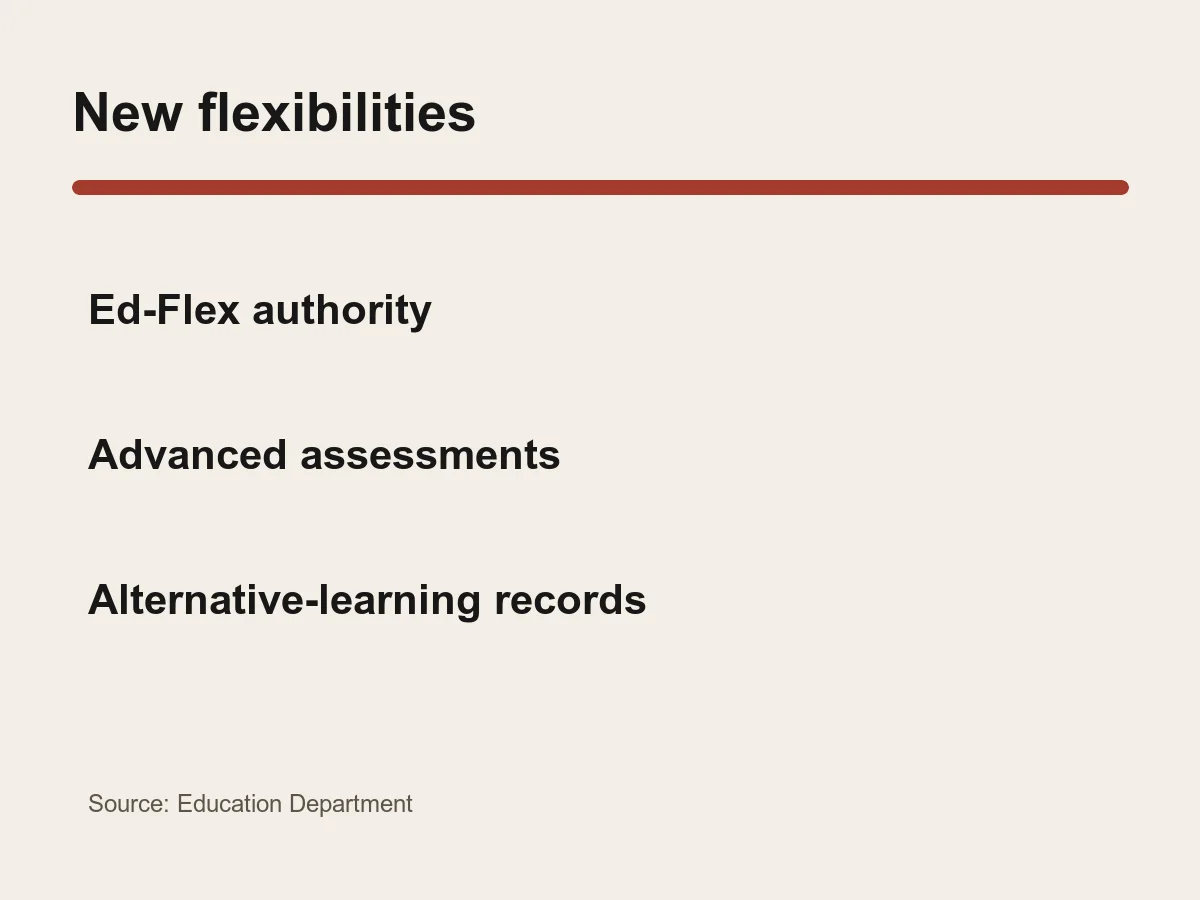
The waiver also lets Arkansas assign students in temporary alternative-learning local education agencies back to their school of origin for accountability and identification purposes. The department says the change is intended to track long-term outcomes more accurately.
Approval does not establish that the flexibilities will improve academic results. That claim requires later evidence on spending, participation, assessment performance, school identification and outcomes for the students affected.
The practical accountability test is whether Arkansas publishes clear allocation rules and comparable outcome data while using the broader discretion. Families and districts will need to see which requirements changed and which protections remain.