A blood-protein panel built from nearly two decades of follow-up data predicted when some people with inherited ALS risk would develop clinical symptoms, a result researchers say could help select and time participants for prevention trials.
The study, published July 27 in Nature Medicine, analyzed 516 serial plasma samples from 137 people in the Pre-symptomatic Familial ALS study. Thirty-three participants developed clinically manifest amyotrophic lateral sclerosis or frontotemporal dementia during follow-up.
Researchers measured more than 5,000 proteins and identified 92 whose concentrations changed before clinical conversion. A selected panel of 19 proteins predicted conversion over time horizons ranging from six months to five years, with cross-validated areas under the receiver-operating curve from 0.80 to 0.89.
A timing estimate, not a clinical test
Among participants who converted, the model’s estimate of time to symptoms missed the observed date by an average of 1.62 years. That is a research result from a small, unusually well-characterized cohort—not a validated test that doctors can use to tell an individual patient when ALS will begin.
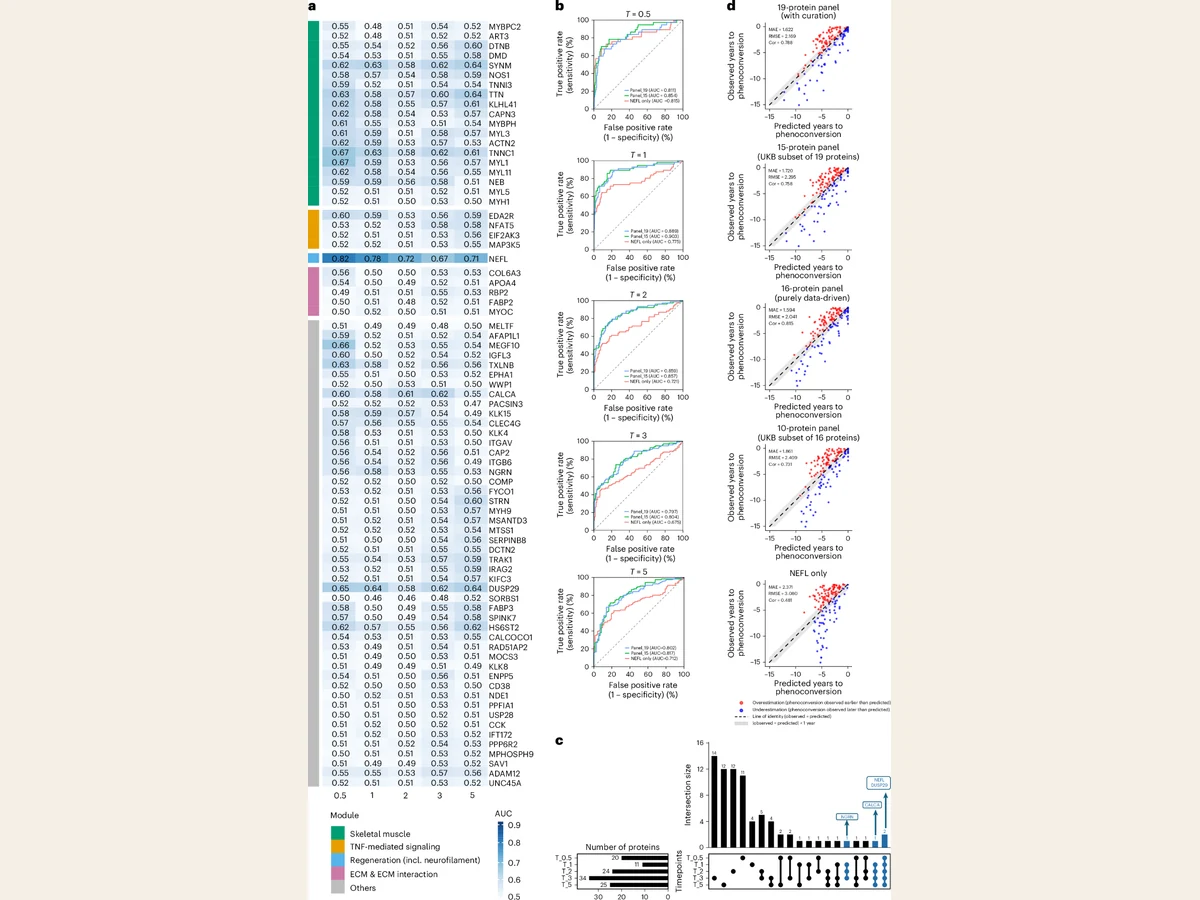
The panel included neurofilament light, or NfL, a marker associated with nerve-cell damage, plus 18 other proteins. NfL alone has helped make pre-symptomatic ALS trials possible, but the authors found that the multi-protein approach produced more accurate timing estimates in their discovery data.
The study population included people carrying pathogenic variants associated with ALS, patients with clinically manifest disease and healthy controls. Because inherited forms account for only part of ALS, the results cannot yet be generalized to everyone who may develop the disease.
Replication helped—and exposed the limits
The team tested overlapping protein panels against UK Biobank records. Several proteins showed similar pre-symptomatic patterns, and the multi-protein panels again performed better than NfL alone.
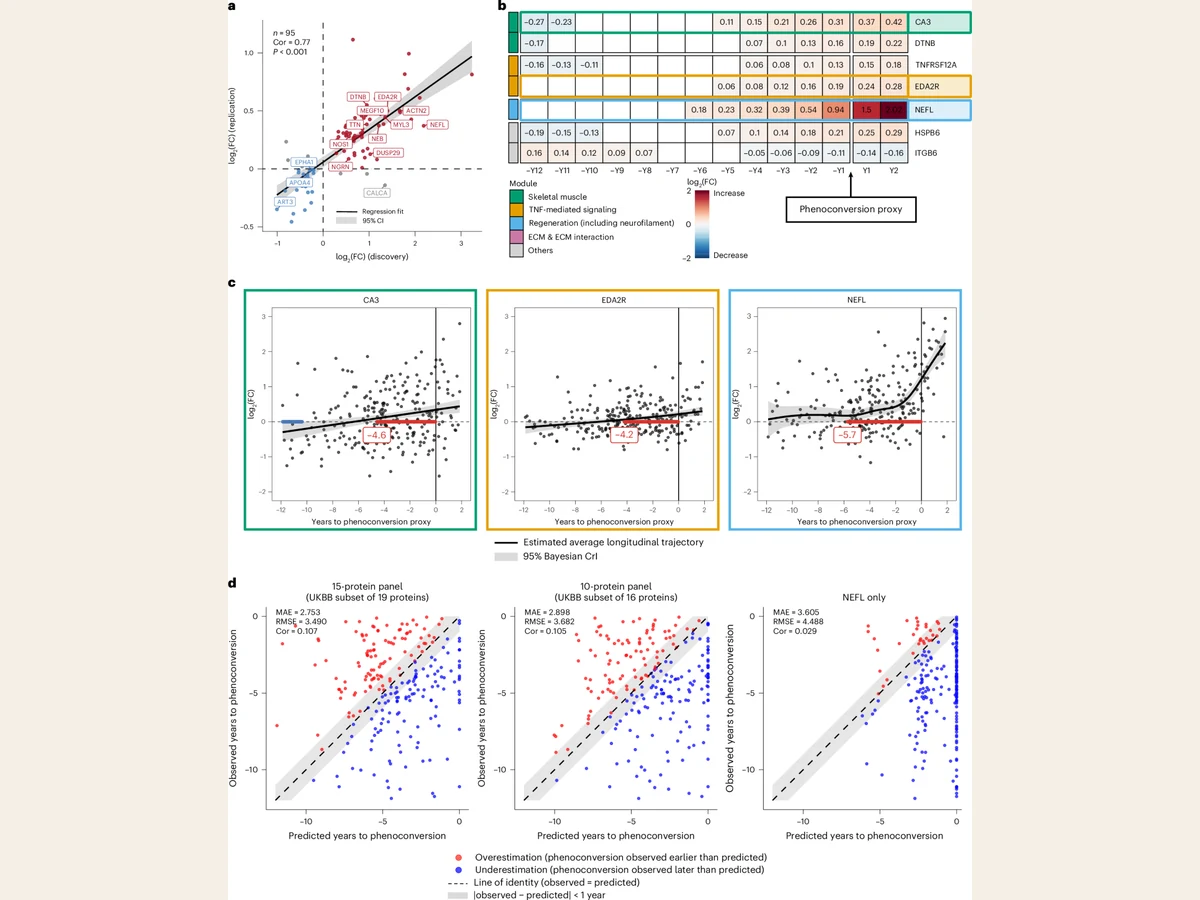
But that comparison was not a clean independent repeat of the original study. UK Biobank protein measurements were cross-sectional rather than longitudinal, and the researchers did not have exact symptom-onset dates. They approximated conversion as two years before a relevant hospitalization, which introduces uncertainty.
The authors reported a 2.75-year mean absolute error for the 15-protein replication panel under that primary approximation. They also disclosed consulting, employment, stock, licensing and intellectual-property relationships; the paper states that Olink did not fund the study or participate in its design or interpretation.
Why timing matters for prevention research
Researchers are evaluating whether gene-targeted treatment can delay or prevent symptoms in people at high genetic risk. Starting such a therapy too early could expose people to years of treatment without clear near-term benefit; starting after irreversible motor-neuron injury may be too late.
A reliable near-term risk signal could narrow that window. The new panel is a candidate tool for that job, but it still needs prospective validation in independent cohorts, standardized laboratory procedures and evidence that acting on its result improves outcomes.