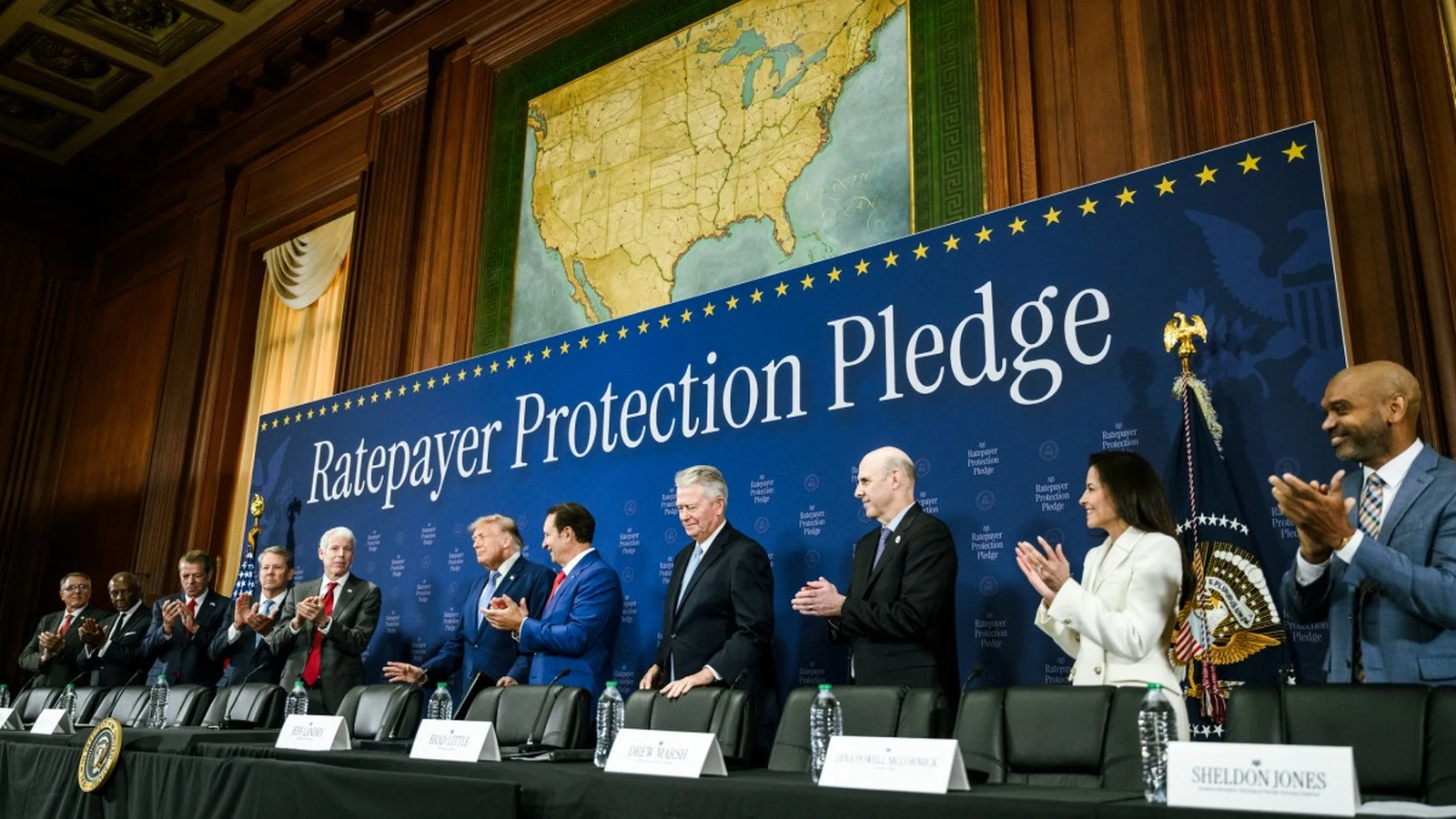
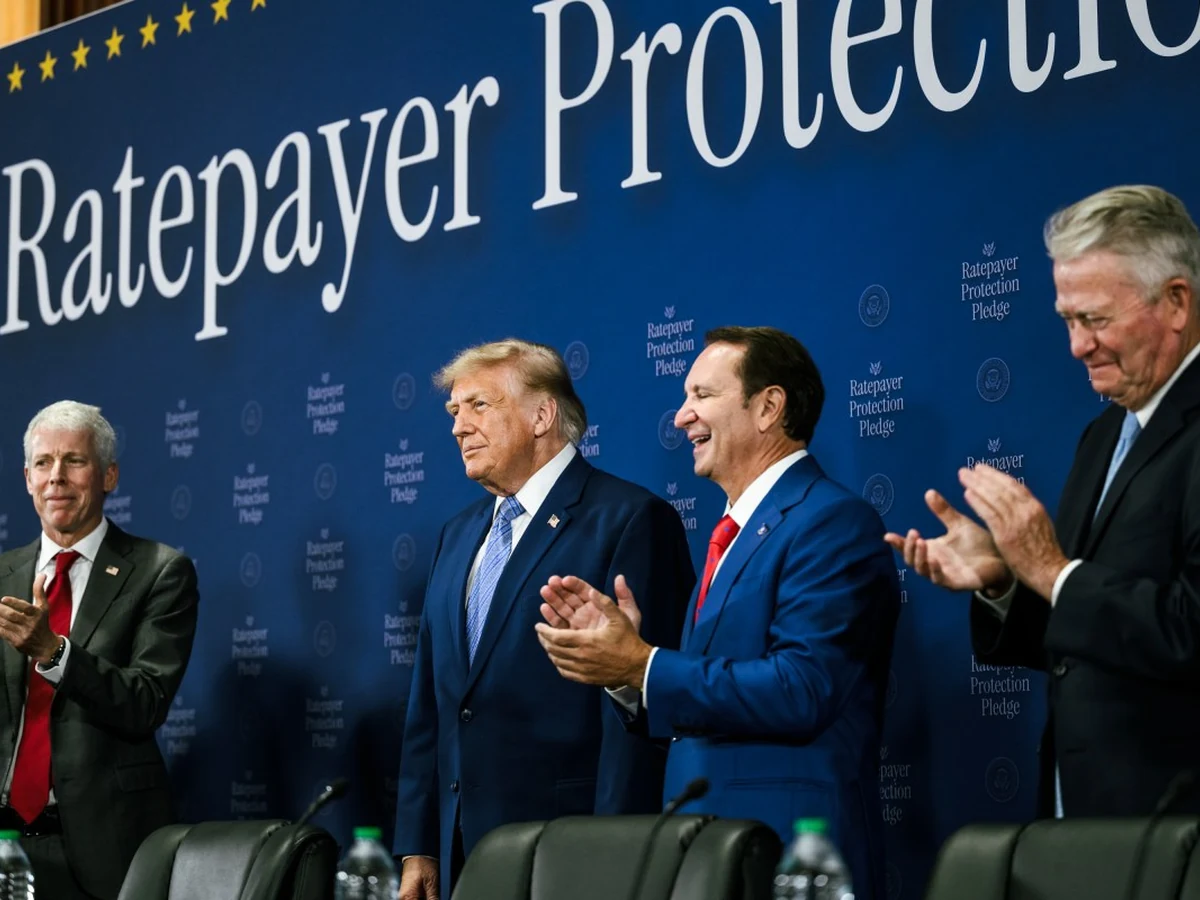
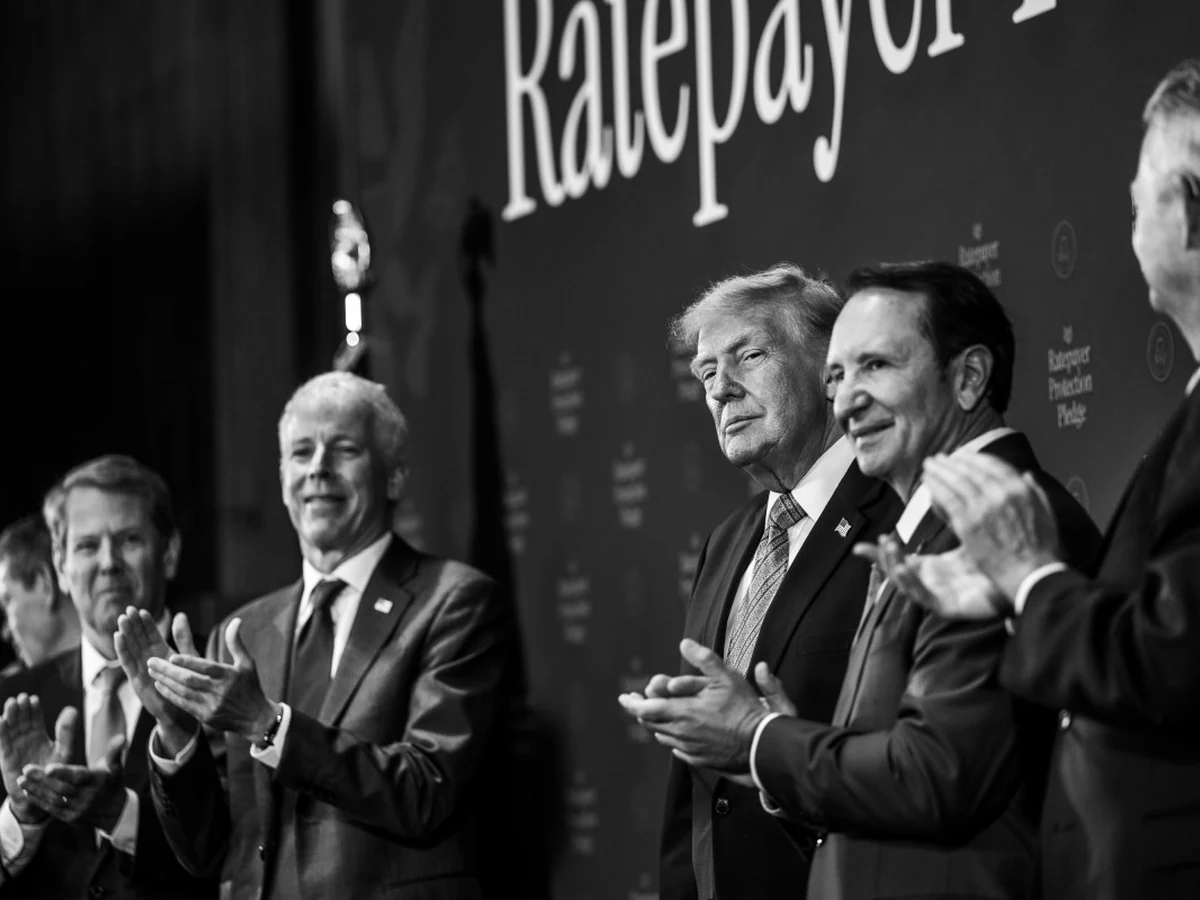
The White House says more than 200 utilities, cooperatives, data-center developers and state governments have joined an expanded voluntary pledge intended to prevent new data centers from increasing electricity costs for ordinary customers.
The administration announced the expansion July 23 at an event at the Environmental Protection Agency.
The White House says participating organizations cover about 80% of electricity delivered to U.S. homes and businesses and reach 263 million people. Those are administration figures based on its signatory and service-territory calculations and should not be treated as independently audited savings estimates.
| Commitment | Responsible actors | Binding mechanism to watch |
|---|---|---|
| Data centers fund needed infrastructure | Developers, utilities and large buyers | Tariff, contract or interconnection agreement |
| Protect customers if a project changes | Utilities, regulators and developers | Minimum payments, collateral and exit fees |
| Allocate system costs fairly | State commissions, utilities and cooperatives | Commission order, rate design or statute |
| Make outcomes measurable | Regulators, utilities and state governments | Public filings and bill-impact reporting |
The pledge’s central principle is that large data-center customers should fund the generation, transmission, distribution and interconnection infrastructure their facilities require rather than shifting those costs to existing ratepayers.
The White House page lists commitments involving four groups: governors and state regulators, large electricity buyers, utilities and cooperatives, and data-center developers.
Participants promise to use tools such as special rate structures, minimum payments, long-term contracts, collateral requirements, exit fees and cost-allocation rules designed to protect other customers if a project is delayed, downsized or abandoned.
The policy addresses a real problem. Data centers can require enormous and rapidly growing electric loads. Utilities may need to build generation, substations and transmission before demand fully materializes. If the project fails or uses less power than forecast, regulators must decide who pays for the unused investment.
A voluntary pledge does not answer that question by itself.
Electric rates are generally set through state utility commissions, municipal systems, cooperatives and contracts. A White House commitment can shape policy and provide political pressure, but the enforceable obligation usually comes from a tariff approved by a regulator, a contract, a statute, a commission order or a financing agreement.
The first accountability question is therefore which commitments have been converted into binding rate structures or contracts.
The second is whether the protections cover all costs. A data center may pay for a dedicated substation while broader transmission or generation costs are spread across the system.
The third is what happens when forecasts are wrong. A minimum-demand charge or exit fee is only useful if it is large enough, lasts long enough and is backed by a creditworthy company.
The fourth is transparency. Customers cannot evaluate the pledge without public information about projected load, capital investment, contract duration, cost allocation and the effect on residential and small-business rates.
The White House lists 281 organizations on its current signatory page while describing the coalition as more than 200. The page also separately refers to governors, seven large electricity buyers, utilities, cooperatives and developers. The count should be treated as a changing roster rather than one fixed number.
The administration says the pledge is already lowering costs, but individual claims should be checked against state commission orders and utility filings. A company’s participation demonstrates a public commitment; it does not prove that every future project will leave every ratepayer unharmed.
The pledge can still matter. It creates a national baseline that governors, regulators, utilities and developers can be measured against. It also makes cost shifting harder to defend after an organization publicly promised that data centers would pay their own way.
Boho News will treat implementation, not the signature list, as the real test: which projects receive special tariffs, what guarantees they provide, which costs remain socialized and whether household bills change after construction begins.