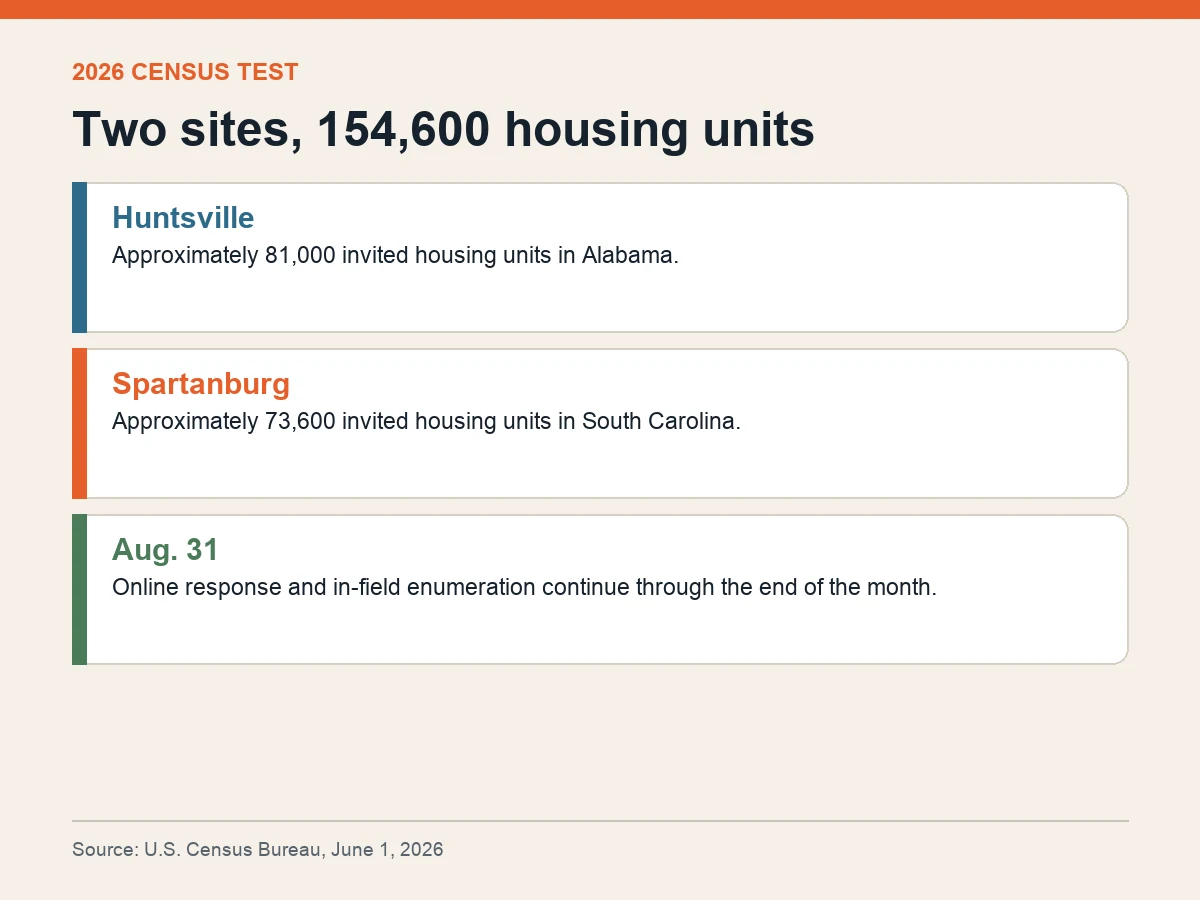
The Census Bureau’s largest operational rehearsal before 2030 is continuing household visits through August 31 in Huntsville, Alabama, and Spartanburg, South Carolina, covering about 154,600 invited housing units.
The two-site test includes approximately 81,000 homes in the Huntsville area and 73,600 in Spartanburg. It is not an official population count; it is designed to test whether proposed methods are workable before the next decennial census.
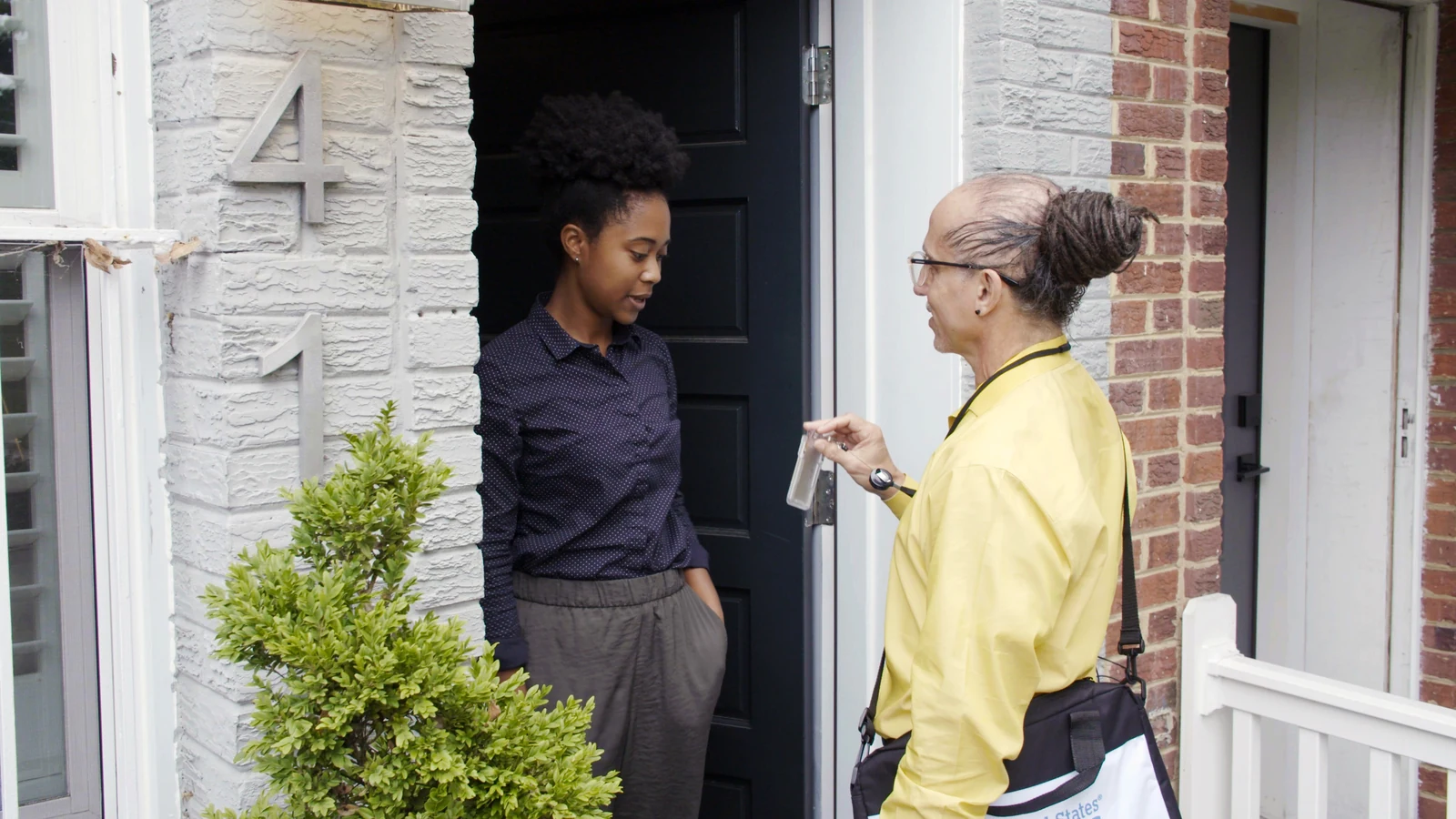
Households that did not respond online may receive an in-person visit from a census taker or a specially trained U.S. Postal Service worker. Visits can occur during the day or evening, including as late as 9 p.m. on weekdays and weekends.
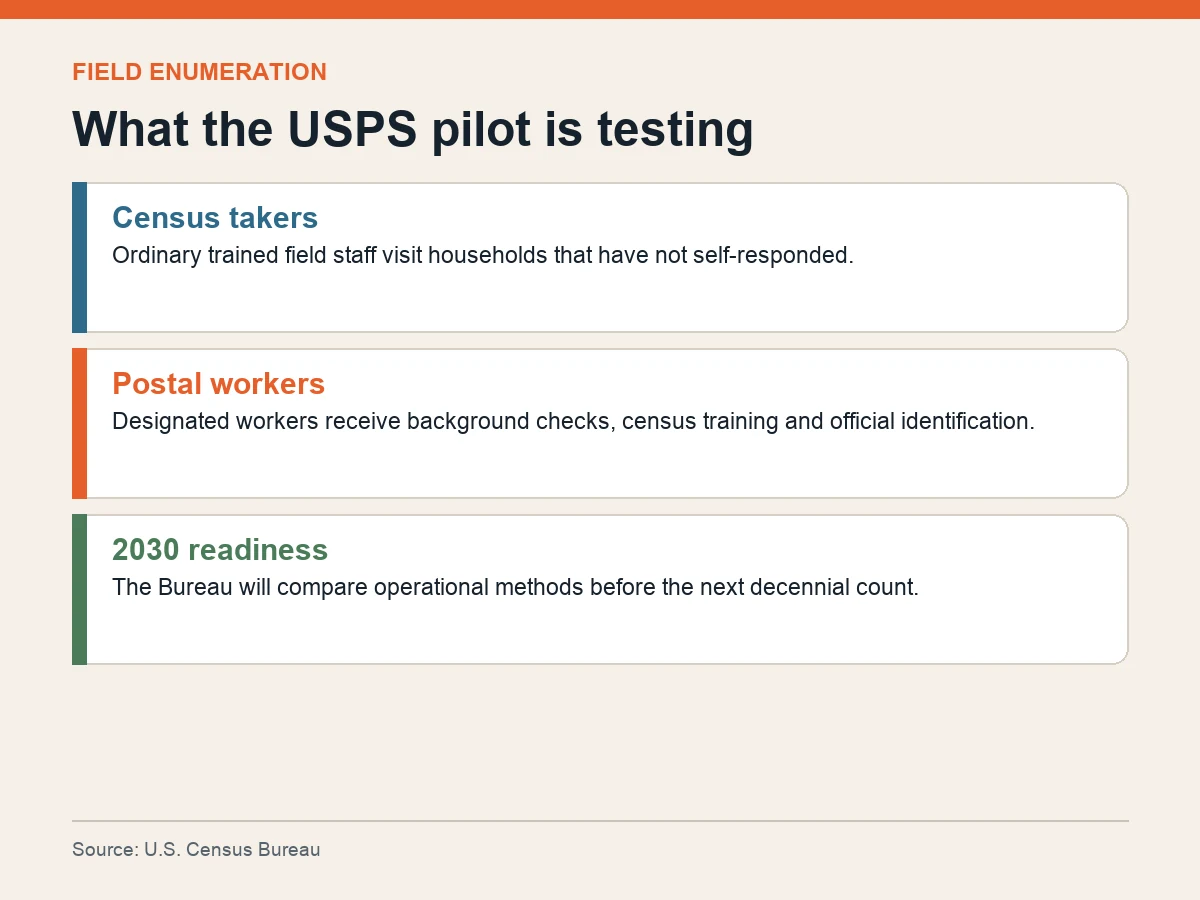
The USPS role differs by site. In Huntsville, postal workers assigned to the pilot are hired as Census Bureau employees for the visits. In Spartanburg, a postal worker may collect responses during a normal delivery route or work as a census taker.
The Bureau says the pilot is testing whether neighborhood familiarity with postal workers can improve in-field enumeration. Those workers undergo background checks and census-specific training and remain bound by the confidentiality requirements in Title 13.
Official field staff should carry a Census Bureau badge with their name and photo and a clearly marked bag. That identification standard matters because the extended hours and doorstep questions can otherwise look unusual to residents.
The questionnaire asks about household members, including name, age, sex, Hispanic origin, race, citizenship and education. Responses remain confidential under federal law, and the test release does not authorize workers to disclose household-level answers to another agency or the public.
Online response remains available through the same August 31 endpoint. The test is therefore comparing modes within one operation rather than replacing digital response with doorstep enumeration.
The Census Bureau has not published final response rates or a verdict on the USPS experiment. Those results belong after data collection and evaluation. What residents can act on now is narrower: the two-site window remains open, legitimate late visits are possible, and official identification is required.